
Museum Project Day – London Transport Museum: Legacies: London Transport’s Caribbean Workforce
Written by Daniel Lira, Specialist in Indigenous Policies at the Museum of the National Foundation for Indigenous Peoples (Brazil, ITP 2025) Hanan Abd Alhamza, Manager, Cuneiform Department at the Iraq Museum (Iraq, ITP 2025) Leila Al-Sammak, Curator of the Ancient Archaeological Department, National Museum of Damascus (Syria, ITP 2025) and Olena Shevchenko, Senior Researcher and Head of the Archaeological Collections Management & Research Department at the Odesa Archaeological Museum (Ukraine, ITP 2025)
On Saturday the 19th July, our team visited The London Transport Museum, to see Legacies: London Transport’s Caribbean Workforce, an exhibition about the Caribbean diaspora in Britain, often called the Windrush generation. The theme lay outside all our usual museum work, so each of us approached it with different frames of reference and personal connections.
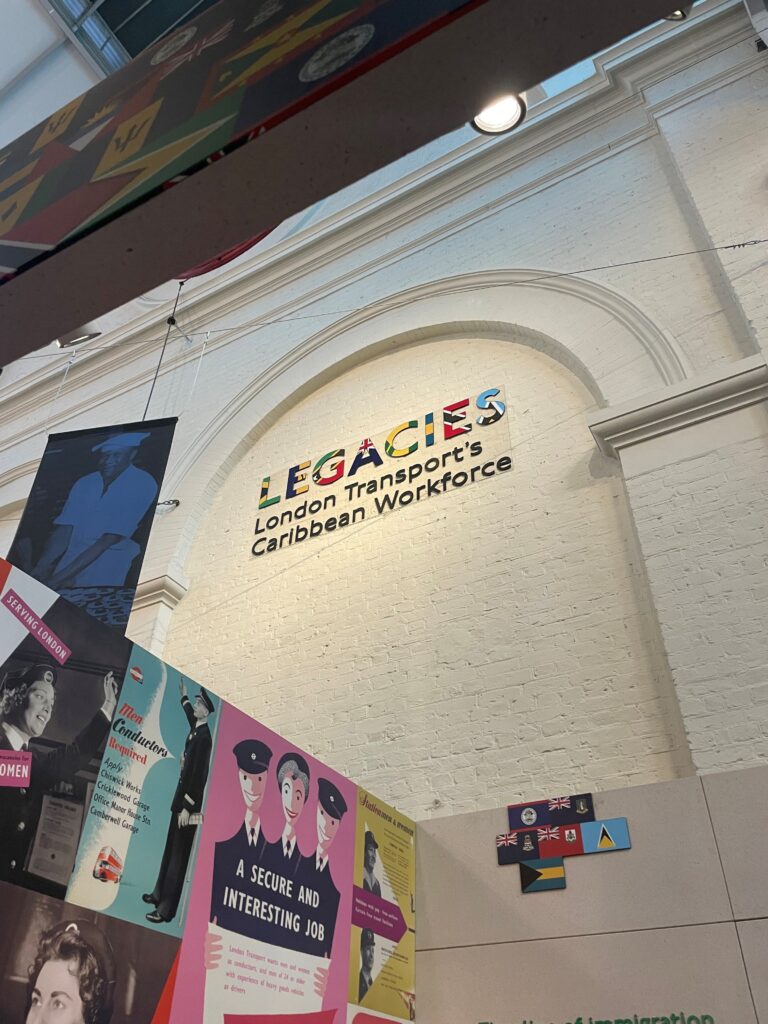
For Daniel, it was surprising to see how migration was sold by the British government as steady pay and adventure but delivered damp rooms, night shifts and walls of casual racism. Still, the Windrush generation turned hardship into motion. Every timetable and conductor’s badge whispered how their labour keeps London breathing. That, to me, is the core message: Caribbean resilience is woven so tightly into “Britishness” that you can’t prise them apart. It can be seen in the everyday food eaten in London, the calypso playing on the streets, and the dancing at Notting Hill Carnival. The recorded voices took me beyond the gallery, toward visa queues, toward assumptions about newcomers’ “luck”, and toward the reality of the hard lives immigrants are forced to lead in developed countries. I had expected a dull transport chronicle, but instead I walked out touched and humbly corrected. Professionally, the exhibit’s co-curated testimonies reminded me that even a modest gallery can shine if the community holds the power of narrating its own history.
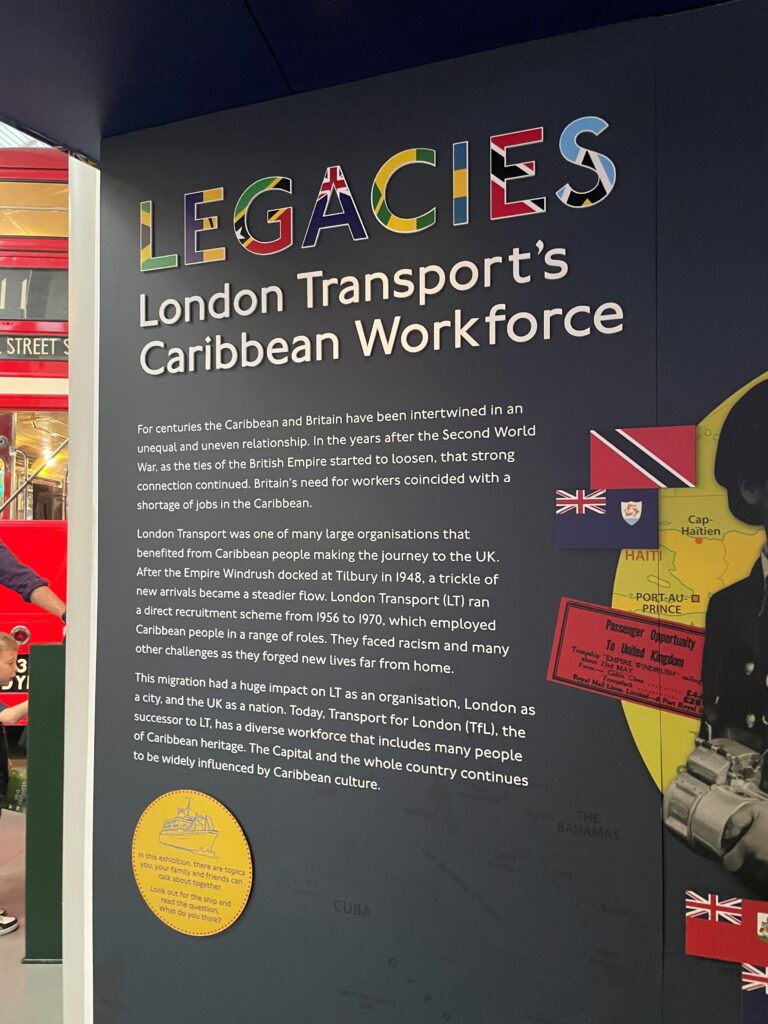
For Hanan, the videos seen in the exhibition made her realise that the life of Caribbean people was difficult after the second world war. Rationing and shortages continued, people still queued for food. People therefore arriving from the Caribbean would have experienced this as well as leaving friends and family behind. Unfortunately, some Caribbean migrants were made to feel unwelcome and treated unfairly and differently because of their colour and racism. Finding jobs and somewhere to live was difficult due to discrimination. Many were forced to accept employment with low wages or poor housing.

Leila learned a lot from visiting this exhibition; it was quite different from what she had imagined. She left with mixed emotions: sadness about the conditions Caribbean people endured during migration, anger at the way these migrants were treated, hope when Caribbean people managed to change their reality through hard work, and happiness when major British companies created job opportunities and helped integrate them into society. She also felt a great sense of fear, wondering, “Will we one day become refugees in another country and be treated with racism because of the wars in the Middle East?”
The exhibition’s main message was that success is achieved through challenges, partnerships between individuals and communities, and sustained follow-up. The advisory board, made up of people of Caribbean origin, wanted to remind us of their tragedy and how they overcame it. I gained a better understanding of Britain’s demographics and the reasons for its diverse population.
As museum professionals, we must create meaningful exhibitions that connect the community’s thoughts and identity to the objects on display. These exhibitions should reach the minds and hearts of every visitor.
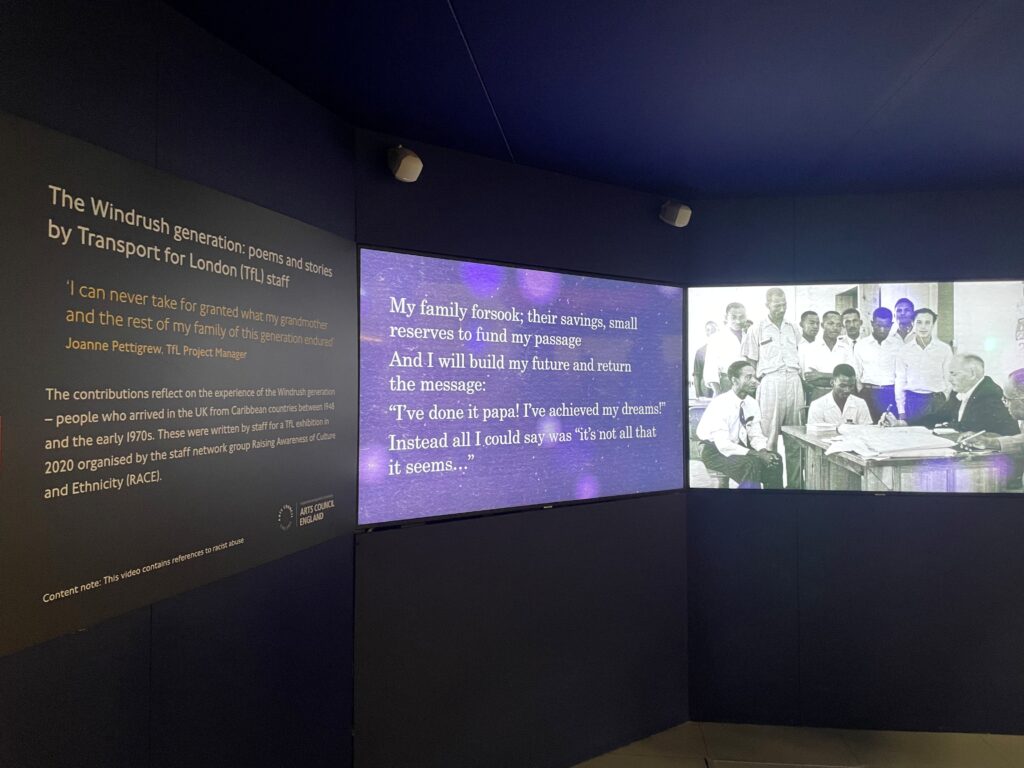
For Olena, the exhibition dedicated to the legacy of Caribbean labour in London left a mixed impression. Despite addressing an important and fascinating topic, the display was hard to find — we discovered it by chance, with no clear signage or introductory information to provide context. Interactive elements were not functioning, and several objects lacked labels or had damaged ones. The videos shown on screens moved too quickly, and the subtitles were difficult to read, making it hard to grasp the content. Most visitors, primarily families with children, only paused near the bright, playful objects, missing the core message of the exhibition. One successful feature was the colourful wooden boards used to present information. I especially liked the map showing migration routes, though it was placed at the end — it would have been more effective at the beginning to help visitors understand the theme. Overall, the exhibition has potential but needs better organisation, accessibility, and alignment with the museum’s family-oriented audience.
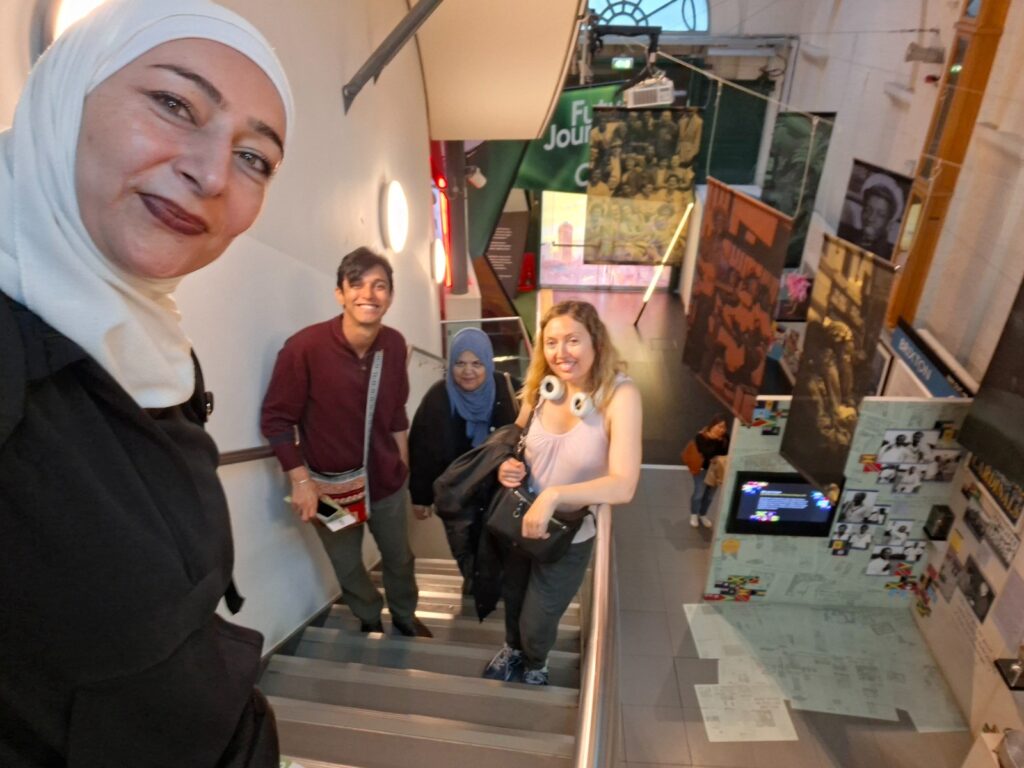
Together, we learned that the Windrush story is both triumph and trial: resilience forged in discrimination now pulses through London’s culture. The exhibition’s power lies in letting those voices speak for themselves. We left convinced that even modest displays must pair honest context with welcoming design so every visitor, family or scholar, meets the past and sees their own future in it.