
Messages to the Sea: When the Museum Tells the Sunken Heritage Stories
Written by Dr Heba Hassan Amer, Curator and Head of Education, Alexandria National Museum (Egypt, ITP 2024)


Beneath the waters of Alexandria lie the remains of once-vibrant cities — Heracleion, Canopus, and parts of ancient Alexandria itself. The depths cradle temples, statues, harbours, and ritual vessels — silent witnesses to the flourishing of the Mediterranean as a space of life, faith, and exchange. There was once a world full of rhythm and dreams — prayers carried by the waves, offerings made to the gods, and bustling ports alive with sailors and merchants. Then came the silence of the deep — when the sea swallowed the cities, concealing them yet preserving their memories for those who dare to listen again.
The underwater cultural heritage represents one of humanity’s most unique legacies, revealing the profound bond between people and the sea — as a source of life, trade, and spiritual connection.
Since the adoption of the UNESCO Convention on the Protection of the Underwater Cultural Heritage (2001), Egypt has been one of the leading nations in preserving this fragile heritage. The Convention aims to safeguard archaeological remains submerged for at least one hundred years, prevent their commercial exploitation, and promote international cooperation in research and documentation — while raising public awareness of the shared value of humanity’s submerged heritage.
In this context, the Alexandria National Museum in Egypt hosted a temporary exhibition featuring artefacts recovered from the sunken city of Heracleion, known in ancient Egyptian sources as Thonis, and in Greek texts as Heracleion — two names referring to the same city that once stood east of Aboukir Bay. This ancient port was Egypt’s gateway to the Mediterranean and a centre of trade, worship, and cultural exchange between Egyptians and Greeks.
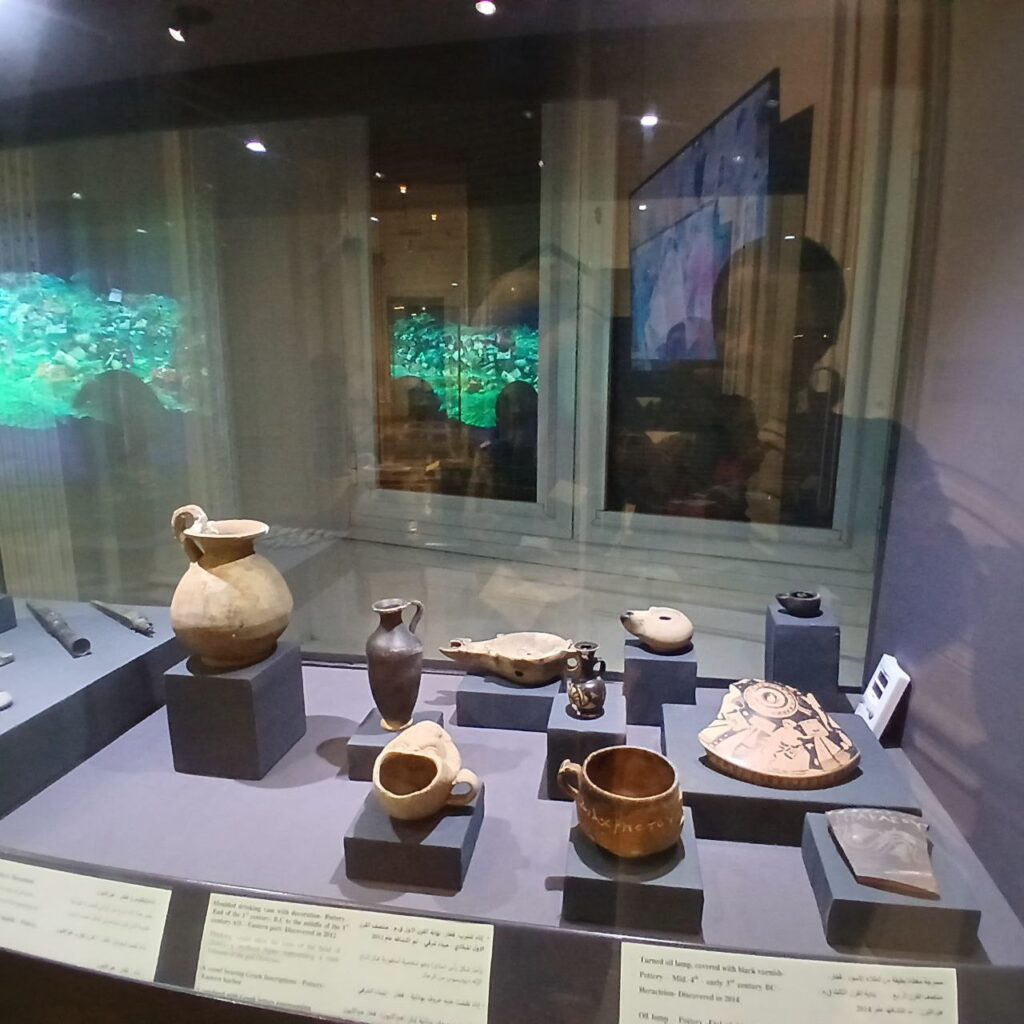
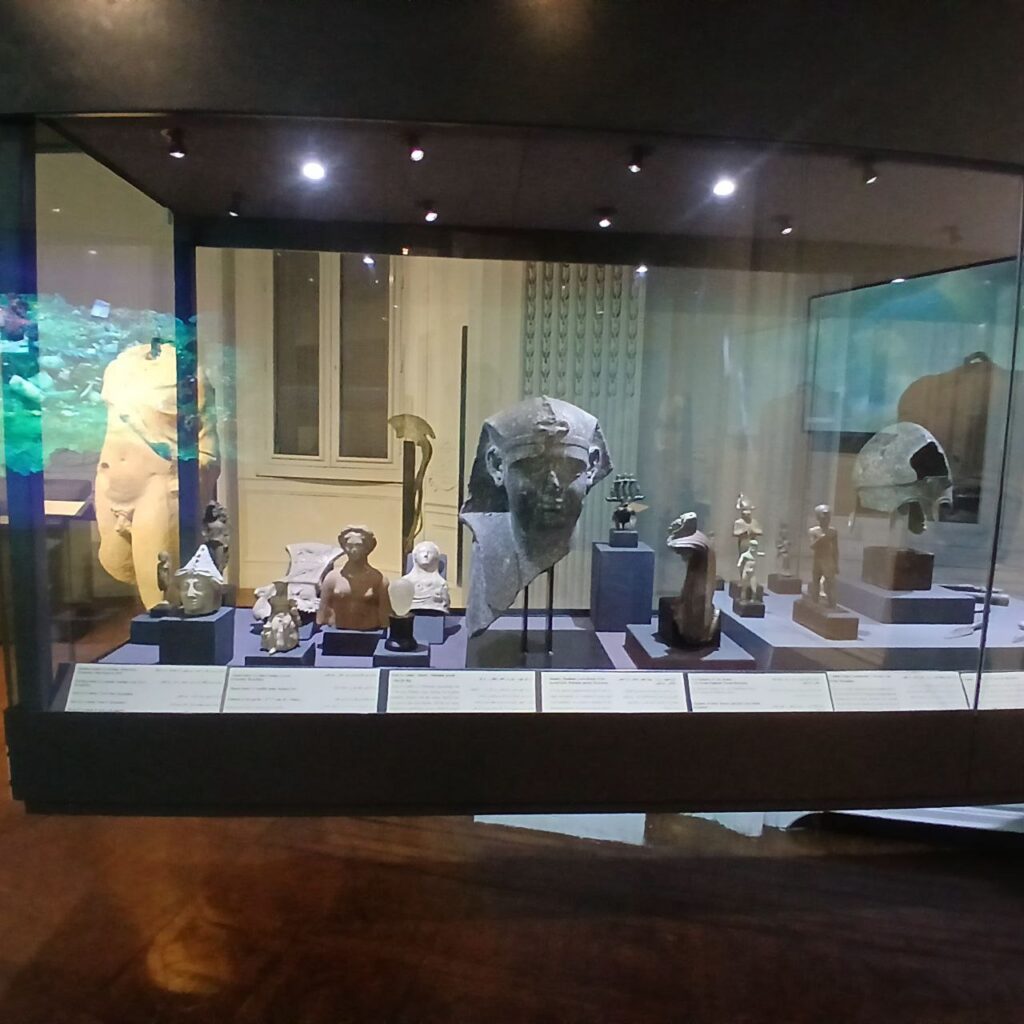
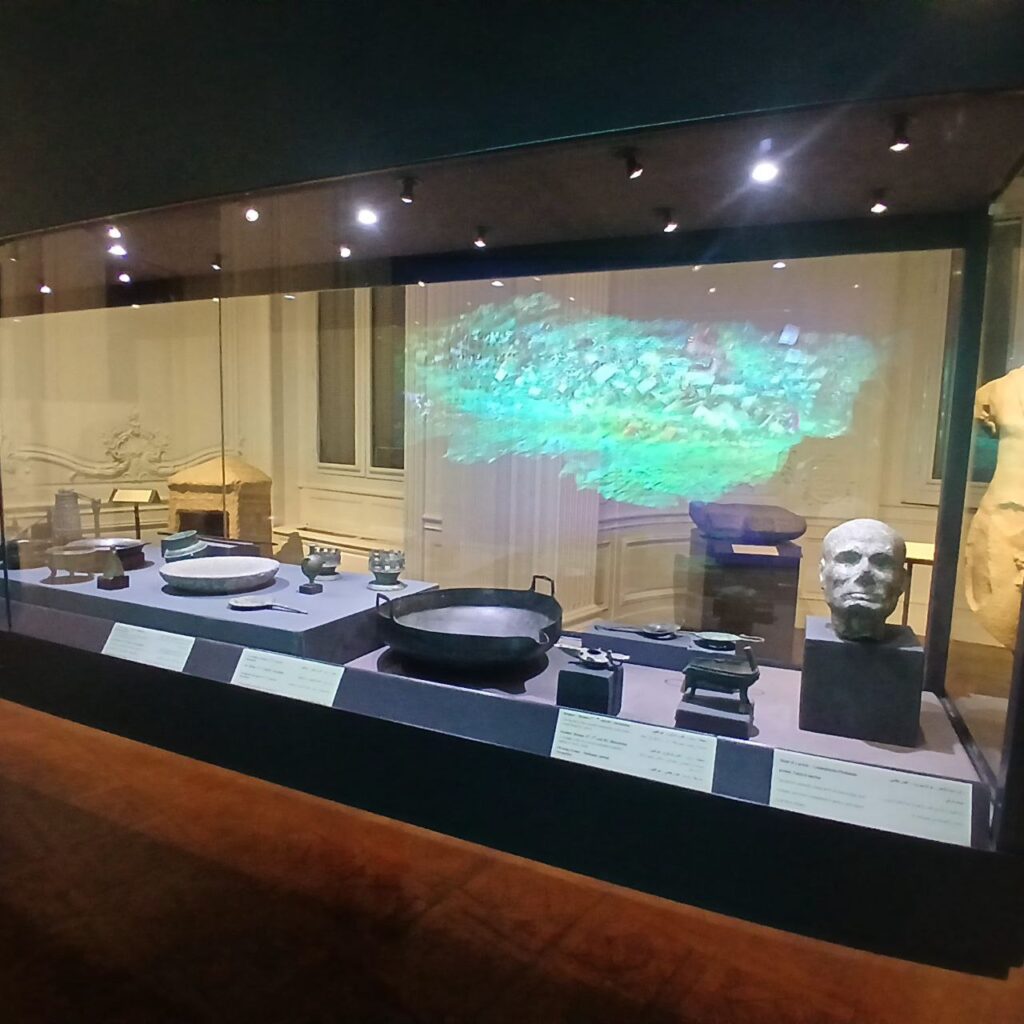
The exhibition displayed a remarkable collection of artefacts that shed light on the religious, economic, and social life of the city. Among the highlights were the Naos of Amun-Gereb, dedicated to ritual worship in the city’s temples, and a bronze Corinthian helmet discovered at the site, dating to the 4th century BC, believed to have adorned a statue of the goddess Athena, symbol of wisdom and warfare in Greek mythology. Together, these pieces illustrate the deep artistic and cultural interactions between Egypt and the Hellenic world.
In conjunction with the exhibition, a hands-on educational and awareness programme was organised for visitors of all ages — especially children and families — to simplify the concept of underwater heritage and link it to values of environmental responsibility and cultural continuity. Participants learned about the methods of underwater archaeology, how it combines science, history, and conservation, and discussed the vital role of local communities in protecting marine heritage from pollution and uncontrolled exploitation.


The programme concluded with an emotional activity inspired by an old coastal Egyptian tradition — whispering one’s wishes into seashells and sending them as messages to the sea. Children and families took part in this symbolic act, holding shells, reflecting on their bond with the sea, and writing heartfelt messages:
“Sorry for all this plastic.”
“We will protect you… You are the lungs of this world.”
“Let’s stop pollution before it kills our beautiful planet.”


Children also expressed their reflections through drawing and colouring, depicting the relationship between humans and their submerged heritage — artworks filled with belonging, wonder, and hope.
Through this shared creative experience, the museum transformed learning into a moment of empathy and connection.
The sunken heritage is not a forgotten past lying in the depths — it is a living message that invites us to listen to what the sea has to say — about memory, about loss, and about hope.