
My journey in ‘Finding Zóbel Prints’
Written by Aprille P. Tijam, Associate Director and Head of Exhibitions and Collections, Ayala Museum (Philippines, ITP 2019)
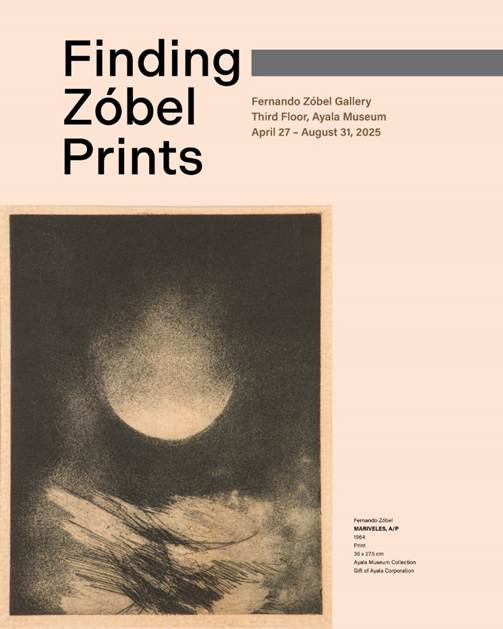
After more than three decades as a museum practitioner, I am deeply honored to be given the opportunity to organize an exhibition – not in my usual role as exhibitions manager, but for the first time, as curator. The exhibition Finding Zóbel Prints is the culmination of years of extensive research on the printmaking journey of Filipino-Spanish abstract artist Fernando Zóbel (1924–1984).
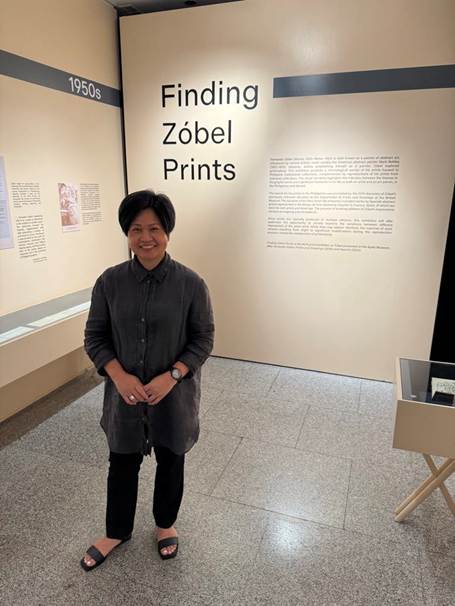
From 2019 through 2024, my research took me to Madrid and Cuenca in Spain, London and Salisbury in the United Kingdom, and different collections in the Philippines. The primary aim of my research was to locate and catalogue Zóbel’s prints. A serendipitous discovery became the turning point of this five-year passion project: Zóbel’s donation from 1972 to 1974 composed of 106 prints and drawings to the British Museum’s Prints and Drawings Department. This remarkable find was set in motion by the gift of a book – Zóbel. Contrapuntos – which I had given to Frances Carey, Chairman of the Marie-Louise von Motesiczky Charitable Trust. It was she who introduced me to Zóbel’s donation at the British Museum during my participation in the 2019 British Museum International Training Programme. As aptly described by Jed Surio in Esquire Philippines Magazine, writing about Finding Zóbel Prints Exhibition at Ayala Museum: “Tijam could not have anticipated that her gift of Zóbel would lead her to a gift from Zóbel.”
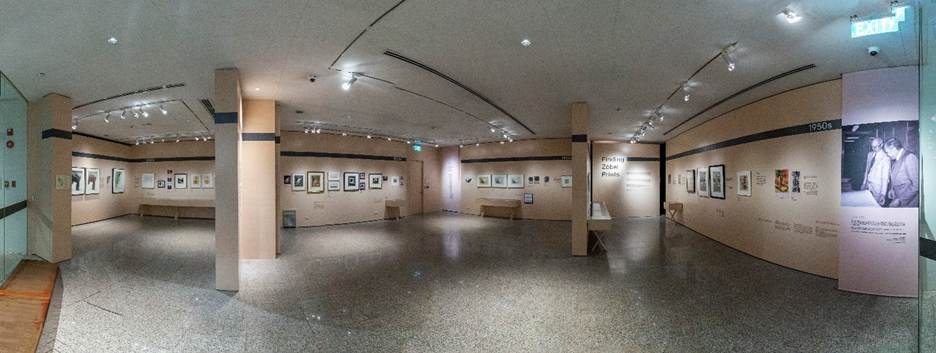
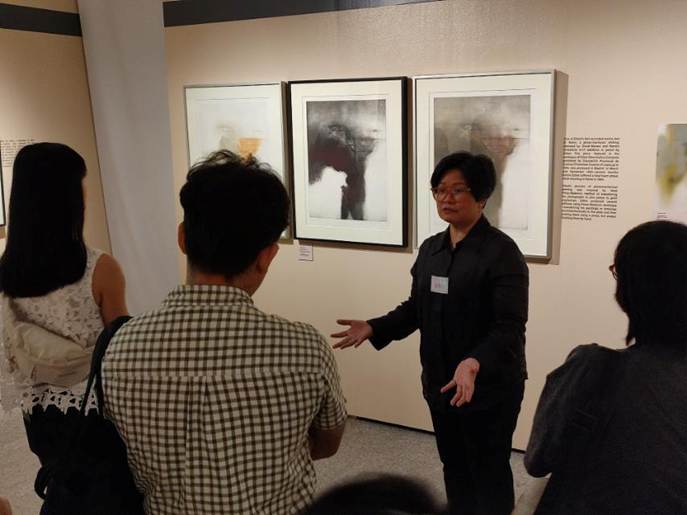
This exhibition presents a chronological survey of Zóbel’s prints housed in Philippine collections, complemented by reproductions from overseas institutions. The visual narrative traces his printmaking journey from the 1950s through the 1980s – highlighting his roles as printmaker, educator, and art patron.
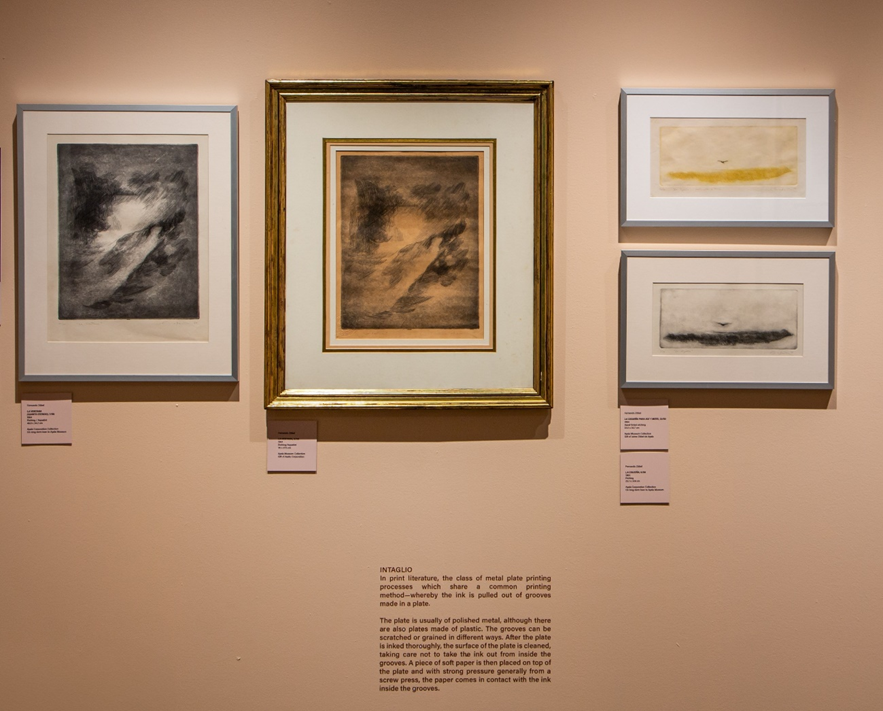
Before Zóbel became widely known as an abstract painter, he first explored printmaking upon returning to Harvard University. From 1949 to 1951, he served as the first assistant curator under Philip Hofer, Curator of Engraving and Graphic Arts at the Houghton Library. During this period, he experimented with various techniques, including etching, lithography, drypoint, boxwood engraving, and xylography. Zóbel’s dedication to the medium extended beyond his own practice. While at the Houghton Library, he organized classes in printmaking and curated exhibitions. Upon returning to the Philippines in the 1950s, he continued to share his knowledge and passion through teaching art appreciation – including printmaking – at the Ateneo Graduate School. To further deepen his knowledge of printmaking, Zóbel attended a residency at the Rhode Island School of Design from 1954-1955. As a generous art patron, he also donated prints—his own and those of Filipino and international printmakers—to museums and cultural institutions in Spain, the United States, the United Kingdom, and the Philippines.
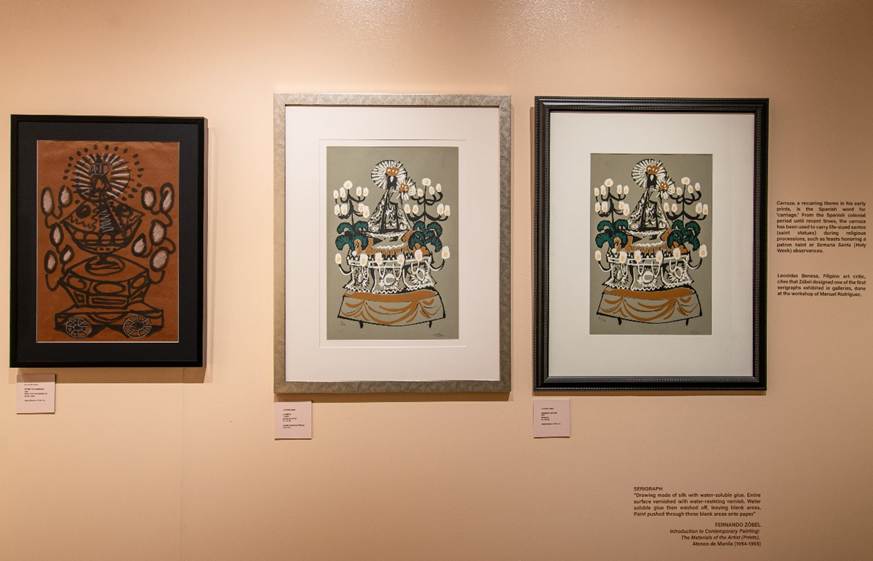
This preliminary survey aims to encourage further research into the representation of Zóbel’s prints in other collections, in-depth inquiry into his printmaking processes, and continued scholarly engagement with his graphic art. Because prints are typically produced in multiple editions, the exhibition invites viewers to closely examine variations between impressions of the same print. The slight to significant differences – whether intentional or not – offer insight into the complexities of printmaking.
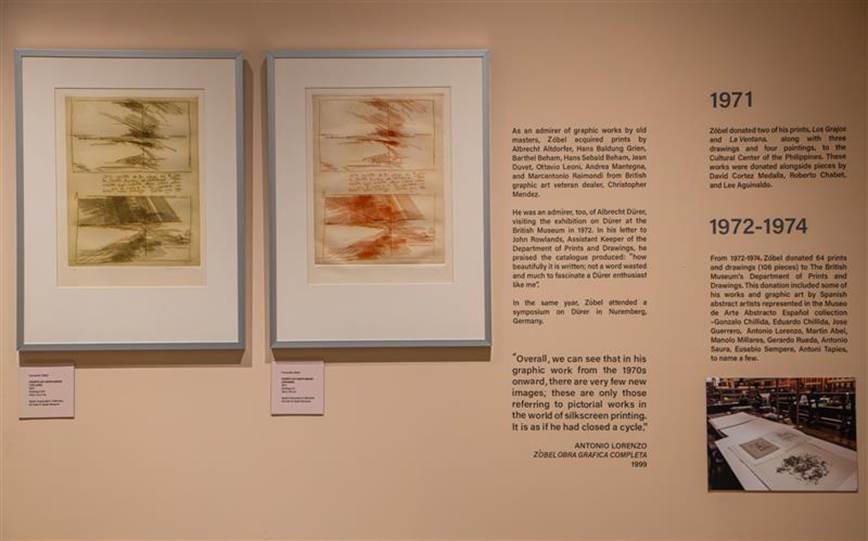
For me, the discovery of multiple editions of a single print was a eureka moment. Each instance was like a revelation. The process of finding them was always exhilarating.
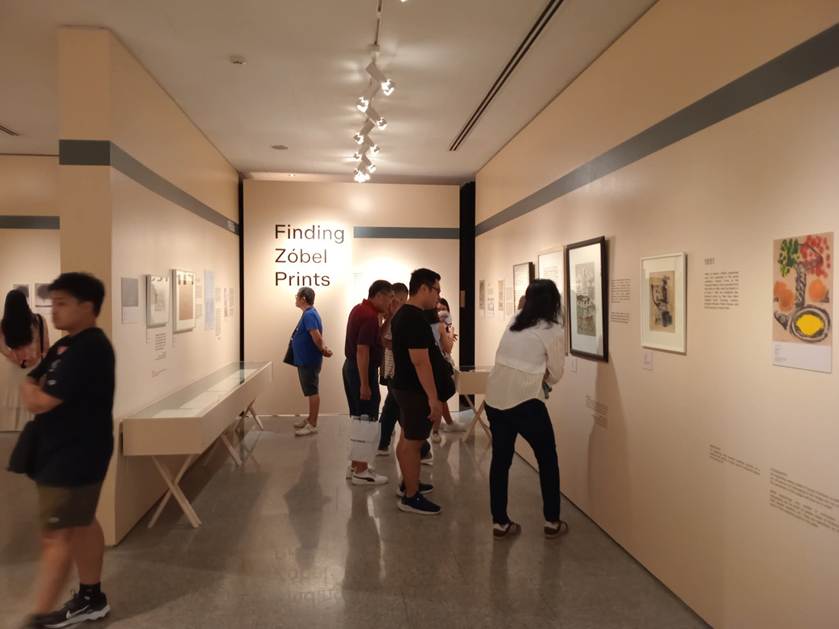
To better understand the different printmaking techniques, I attended workshops and visited exhibitions dedicated to prints. In Cuenca, I had the privilege of interviewing Perico Simón, who now owns Zóbel’s etching press (tórculo), housed in his workshop. During my visit, Perico demonstrated the etching process while I simultaneously interviewed Melli Pérez-Madero, to whom Zóbel gifted the press in 1975. I also joined various printmaking groups on Facebook, allowing me to learn from this community of practitioners and deepen my appreciation for the medium.
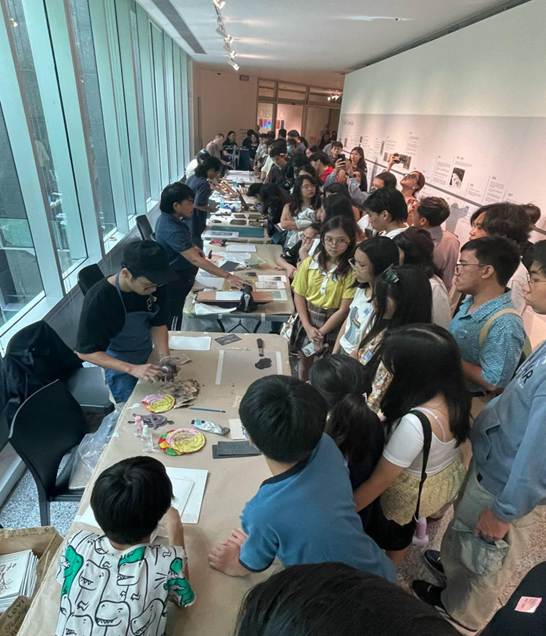
I still have much to learn about printmaking. But throughout this journey, I not only uncovered Zóbel’s prints – I also discovered the deep passion of the printmakers I met in the Philippines, both young and seasoned. Their dedication and generosity were inspiring. It also became clear to me that there is a growing and enthusiastic interest in printmaking in the Philippines.
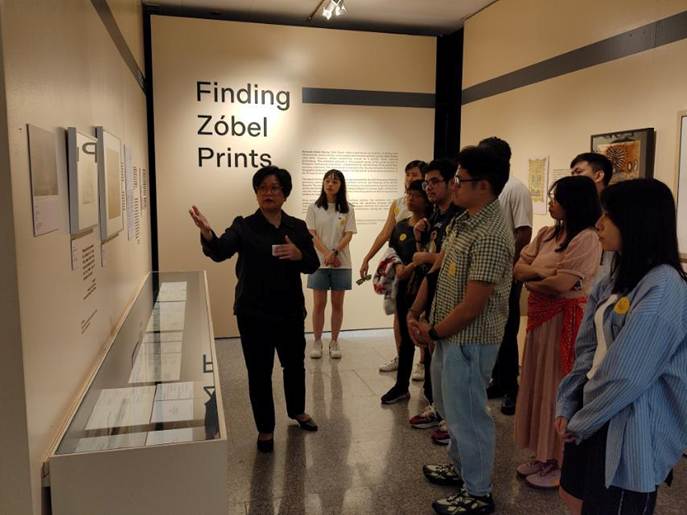
I am deeply grateful to the following for their invaluable support throughout this journey: the British Council–Connections Through Culture Programme; the British Museum International Training Programme–Research Grant (2021, 2024); British Museum Department of Prints and Drawings; Fundación Juan March; Museo Nacional del Prado; Ayala Foundation; Ayala Museum; Ayala Knowledge Management; Ayala Corporation; Bangko Sentral ng Pilipinas; Cultural Center of the Philippines; Ateneo Art Gallery; Ateneo School of Humanities; Kalaw-Ledesma Foundation; Georgina Zóbel Padilla; Alejandro Zóbel Padilla; Claire Messenger; Frances Carey; Hugo Chapman; George Peckham; Anna Cottle; Amelia Kedge; Christopher Mendez; Lorna Rowlands; Mariles Gustilo; Dr. Nina Baker; Dr. Manuel Fontán del Junco; Inés Vallejo; Celina Quintas; David Plaza Sagrado; Luis Martínez Uribe; Marta Ramírez Menéndez; Sonia Corsini; Marta Suárez-Infiesta; Irene Sen Campmany; Francisco Romero Milan; Christian Vallez; Jan Cacdac-Siena;Kenneth Esguerra; Ditas Samson; Arnold Torrecampo; Tenten Mina; Joan Gando; Jei Ente; Kam Omolida; Frankie Locsin; Rex Cabugon; Pandy Aviado; Ricky Francisco; Angela Silva; Jonathan Chua; and dear family and friends.
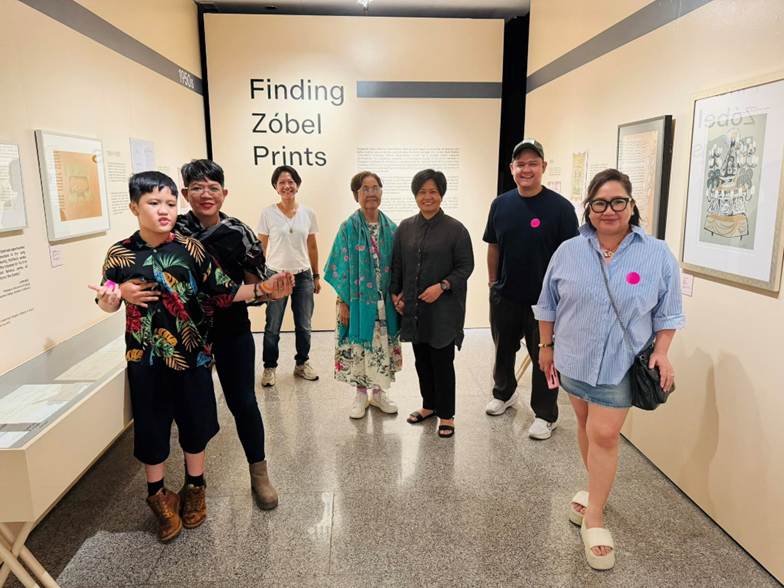
The process of locating and studying the various editions of Zóbel’s prints will remain an ongoing research journey for me.
Finding Zóbel Prints is on exhibit at Ayala Museum, Philippines until September 7, 2025.