
What if Colors Could Speak? A Palace Museum educational exhibition refined through ITP insights
Written by Li Yingchong, Section Chief of Educational Research and Development, The Palace Museum (China, ITP 2025)
As an educator and the curator of this exhibition at the Palace Museum, and also a participant in the British Museum’s International Training Programme (ITP) summer exchange, I am thrilled to share the resounding success of What if Colors Could Speak?—the first immersive educational experience exhibition ever launched within the Palace Museum’s historic compound.
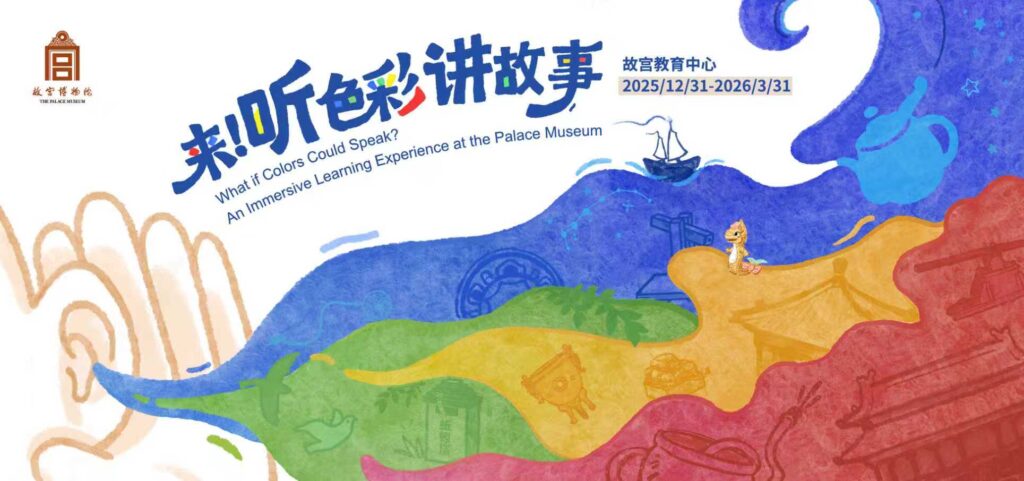
Conceived and initiated over 18 months ago, the exhibition is rooted in in-depth research on the Forbidden City’s cultural heritage, with its core concept, thematic framework and exhibit design refined and shaped through an extensive curatorial process. My time in the UK fell at the critical stage of crafting exhibition panels and labels, where the ITP’s international insights into child-centric audience engagement provided targeted, invaluable inspiration for refining how we communicate complex cultural stories to young visitors. Since its opening, the exhibition has become a beloved cultural destination for all ages, welcoming a maximum of over 1,800 visitors daily and emerging as a special stop for educational tour guides leading children to explore the Palace Museum. Since its opening on December 31, 2025, it has welcomed over 47,000 visitors in less than two months, including nearly 13,000 child visitors.


Overview: A Color-Centric Immersive Journey in the Forbidden City
Built on an 18-month curatorial vision, What if Colors Could Speak? takes color as a universal, intuitive gateway to the Palace Museum’s heritage, rejecting the traditional “look but don’t touch” museum model to create a multi-sensory, interactive space across 4 indoor thematic zones and 2 outdoor art installations, tailored for young visitors and their families. Its core narrative weaves together stories of architectural heritage, traditional Chinese culture, cultural inheritance, Sino-foreign exchange and sustainable wisdom.
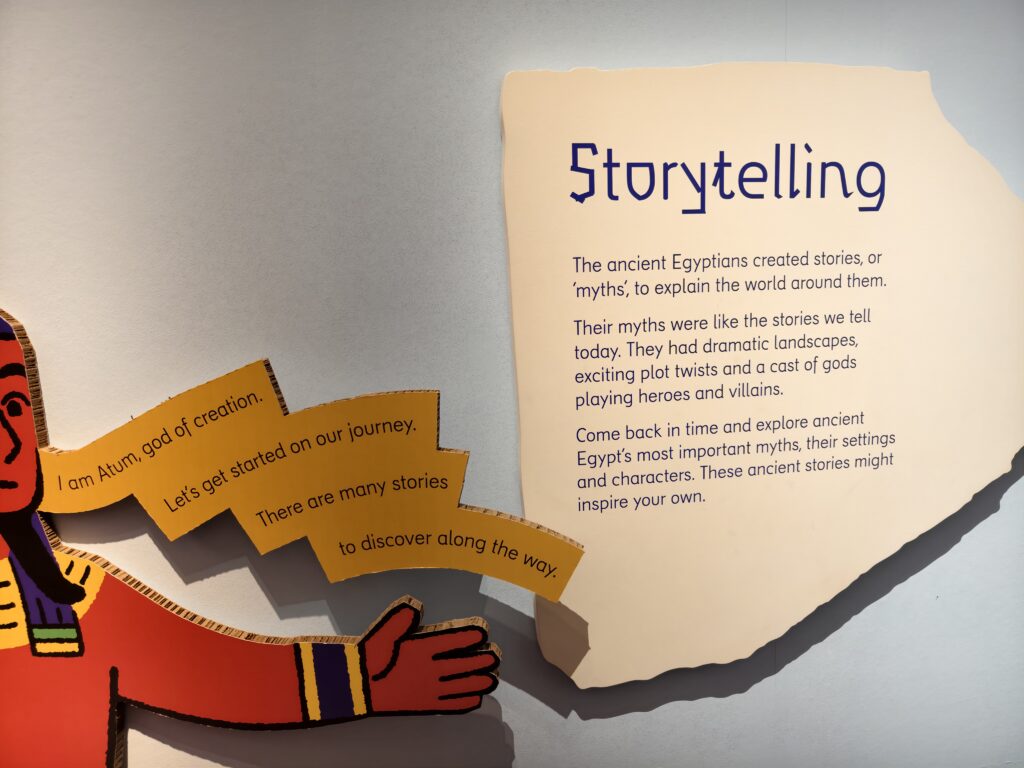
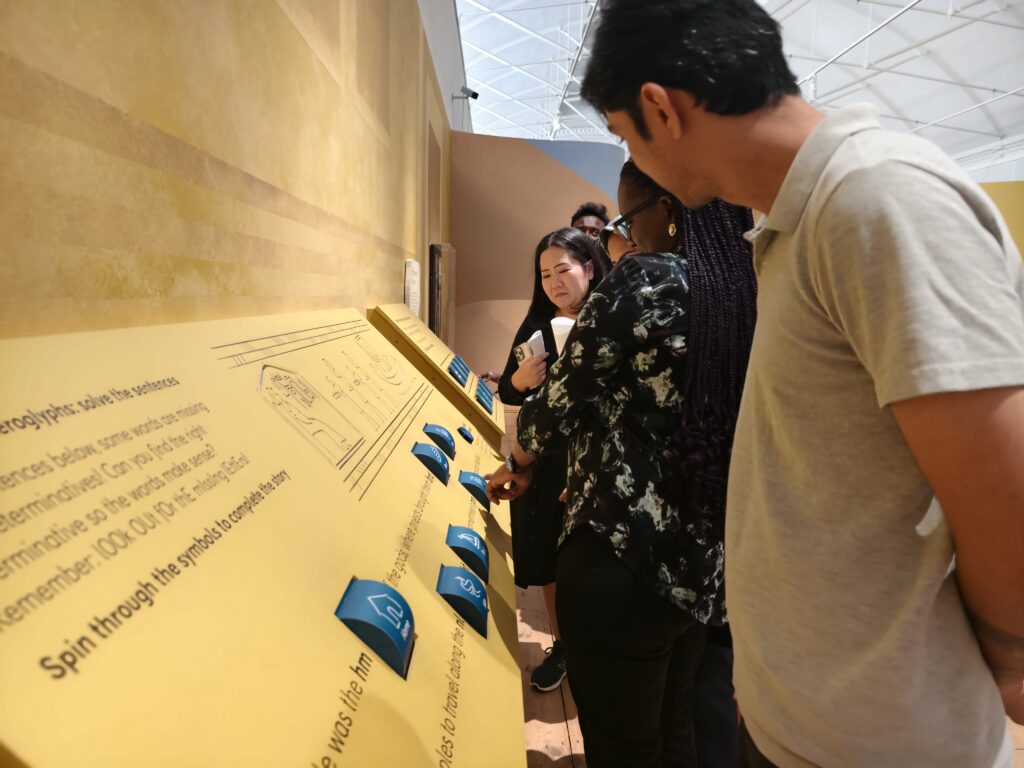
The ITP’s enhancement lay in elevating this narrative’s communication: the child-friendly label writing, intuitive wayfinding and audience-centric panel design refined during the programme ensure pre-planned stories land with clarity and joy for young audiences. A visit to the Young V&A showed me its outstanding interpretive design for young audiences: concise, question-led labels, playful visual cues, and a focus on sparking curiosity rather than rote information delivery. Its Egypt-themed exhibition was especially insightful, distilling complex history into relatable, age-appropriate language; a short talk with its curator also gave me new ideas for balancing educational rigor and audience engagement. These takeaways directly shaped our exhibition’s narrative, vocabulary and panel design. During my ITP stay in the UK, I led multiple online sessions with my Beijing curatorial team to polish drafts, align on a child-friendly tone, and balance academic accuracy with approachability. As I finished the ITP, the final version of all the exhibition’s interpretive text was completed – making this vital “voice” of the exhibition a direct result of cross-cultural learning.
Aligned with our original curatorial values and global sustainable museum ethics (an alignment reinforced by my ITP learnings), the exhibition uses degradable and modular materials for all installations. Complementing the physical space is a comprehensive suite of age-tailored educational resources and activities—a key part of our initial plan—including a tiered learning sheet, offline workshops, online lectures and school partnership programmes, all designed to extend the exhibition’s educational impact and create a holistic learning experience for families and students.
Thematic Zones: Pre-Designed Narratives, Refined for Young Audience Connection
Each thematic zone has a distinct color and its deep roots in the Palace Museum’s collection and history.
Red: The Eternal Guardian of the Forbidden City
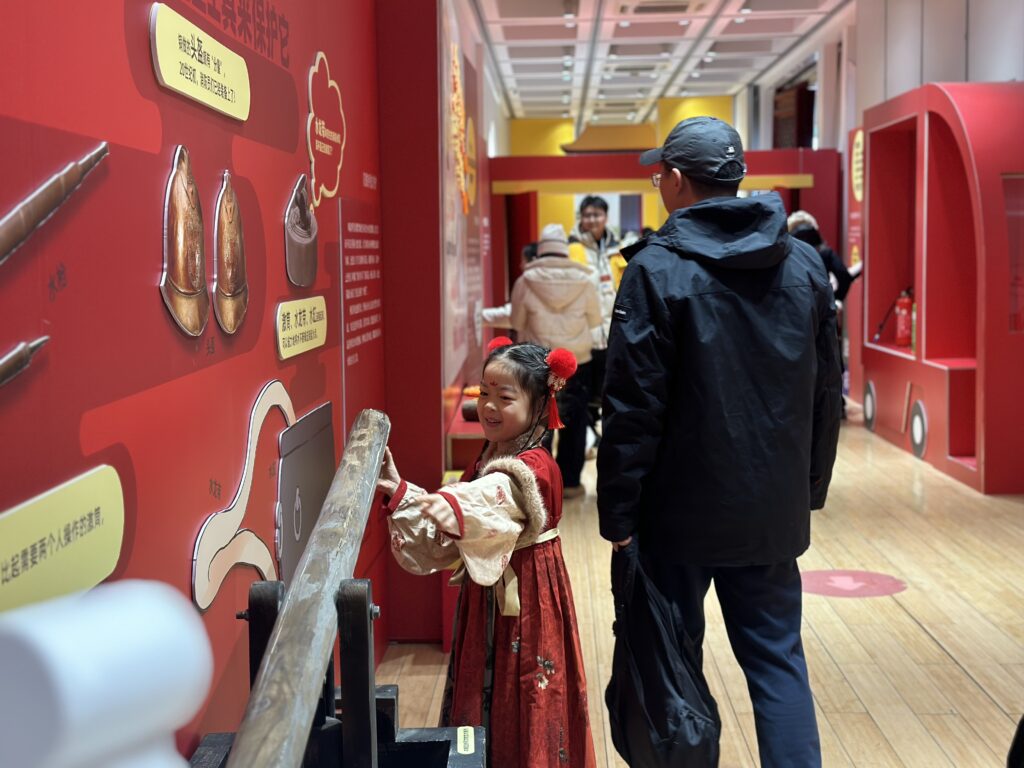
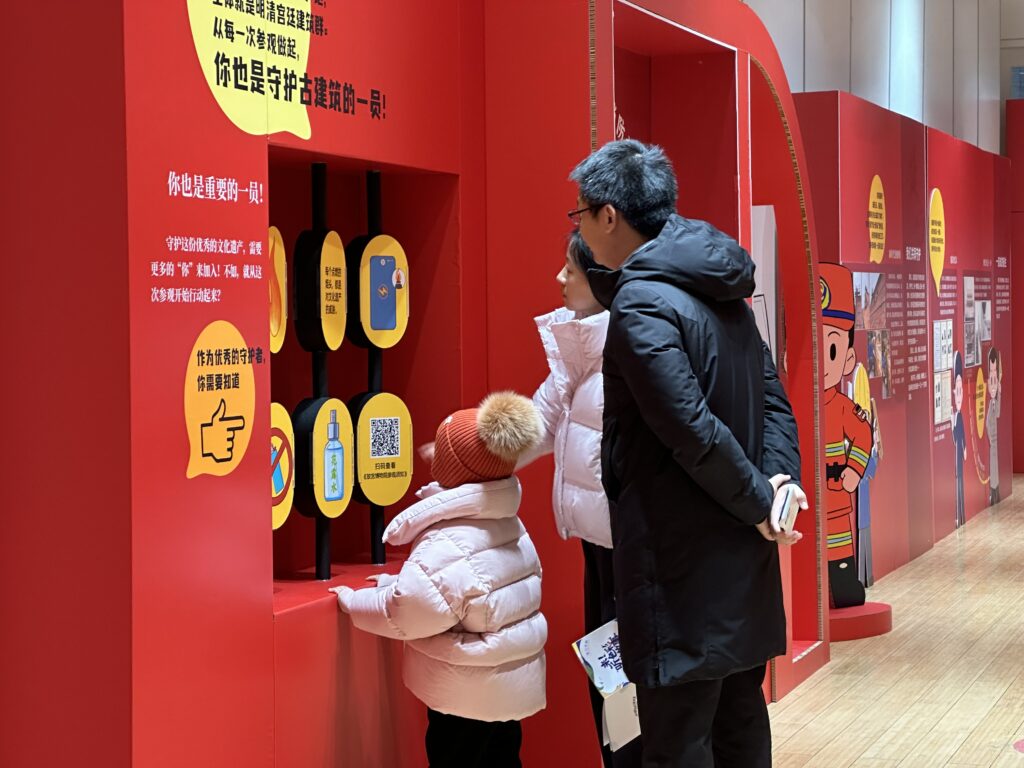
As the first thematic zone we conceptualized, this area delves into the symbolic connotations of red in traditional Chinese culture – joy, protection and auspiciousness – while exploring the ancient craftsmanship behind the iconic red walls and painted beams of the Forbidden City, as well as the enduring efforts to preserve and safeguard these cultural treasures.
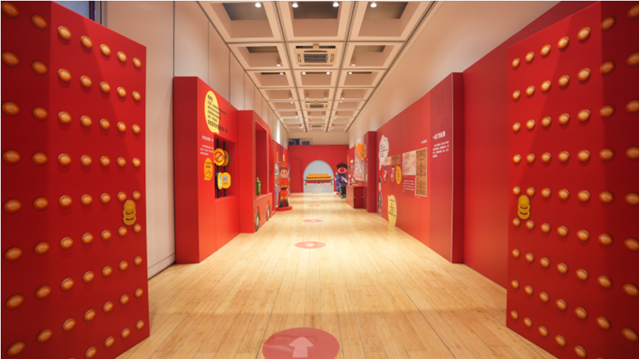
The entire zone is a conceptual recreation of the Taihe Men (Gate of Supreme Harmony), the first architectural landmark along the Forbidden City’s central axis. Through the stories of how different people safeguarded this gate across six historical stages from the Ming to the Qing dynasties, visitors are guided to experience the centuries-long history of cultural heritage preservation in China: from fire prevention measures for the building itself and detailed surveying and documentation, to China’s first attempt to install lightning rods on ancient architecture; from architectural restoration supported by modern conservation techniques, to the establishment of a comprehensive multi-dimensional protection system and dedicated professional team covering security, research, preservation, interpretation and communication.
Yellow: The Perpetual Vitality of Chinese Civilization
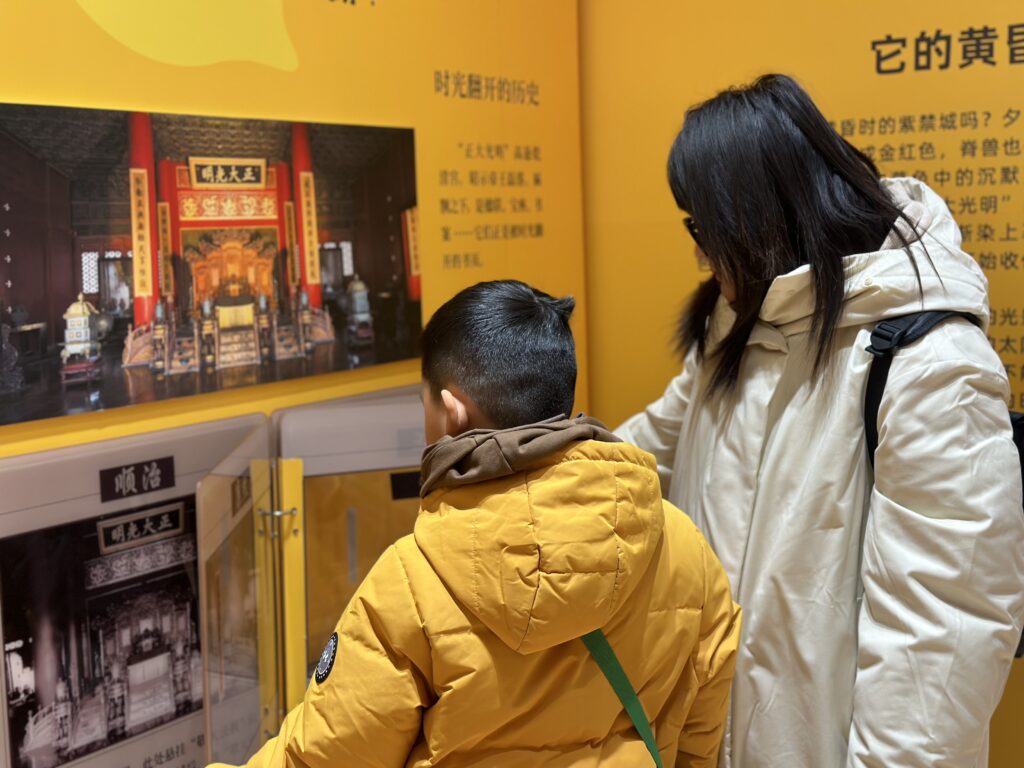
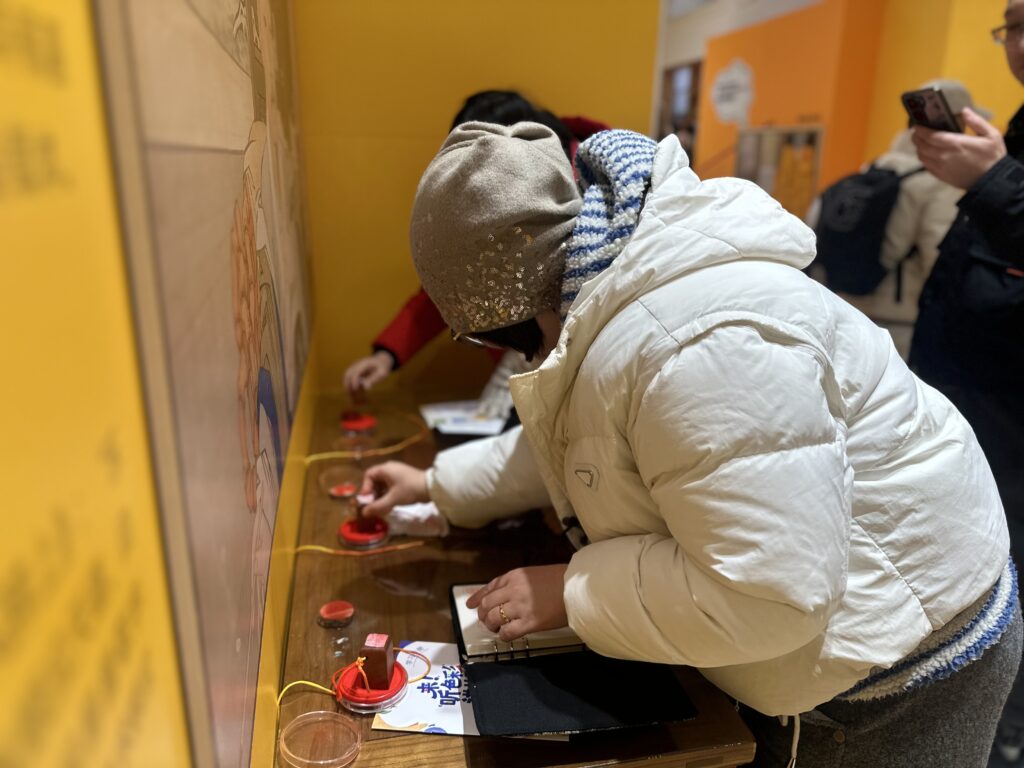
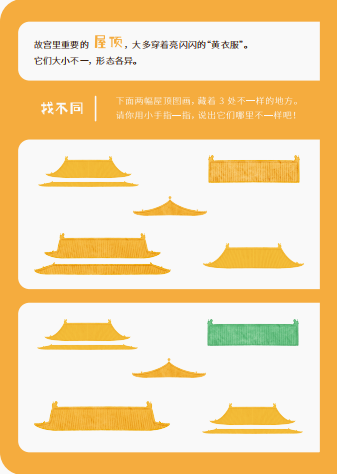
Conceived as the core of the exhibition’s “Cultural Inheritance” theme from the very start, the Yellow Zone takes the form of a conceptual roofscape. As visitors step out of the red-hued Taihe Men (Gate of Supreme Harmony), they enter this zone—a nod to Taihe Dian (Hall of Supreme Harmony), the next landmark along the Forbidden City’s central axis. Traversing the Yellow Zone means walking the full length of the axis, a journey that unfolds through spatial transformation.
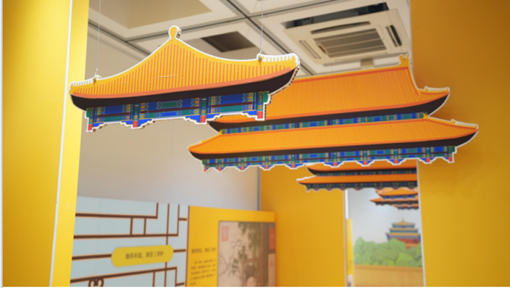
As we guide visitors along this conceptual central axis within the zone, we weave together centuries of history through stories of the axis’s iconic structures across different eras. We also trace the remarkable evolution of these imperial buildings—from the imperial palace of ancient China to the world-renowned museum it is today—charting a profound temporal shift.
In this journey through space and time, the color yellow evolves too: from the solemn hue emblematic of imperial sovereignty, to the muted tone that marked the twilight of the Qing Dynasty, and finally to the vibrant, vivid shade it is today, brimming with new life.
Blue: The Bridge of Dialogue Between Chinese and Western Civilizations
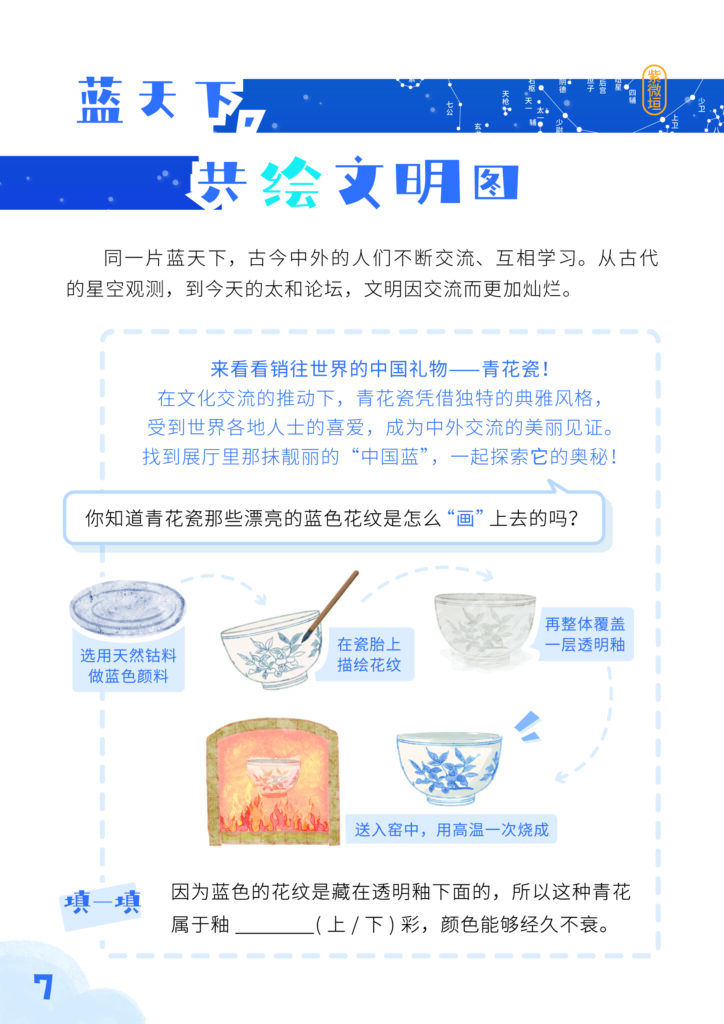
Blue is the sky above all humanity and the vast ocean connecting the world, a color that symbolizes communication and co-creation. This zone takes the blue sky above the Forbidden City’s rooftops as its initial artistic concept; walking through it is like wandering between the starry sky and the ocean, exploring the stories of cultural exchange spanning ancient and modern times that can be found in the Forbidden City—stories encompassing science, craftsmanship, artifacts and culture at every level.
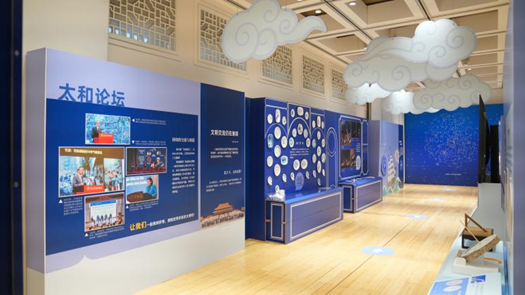
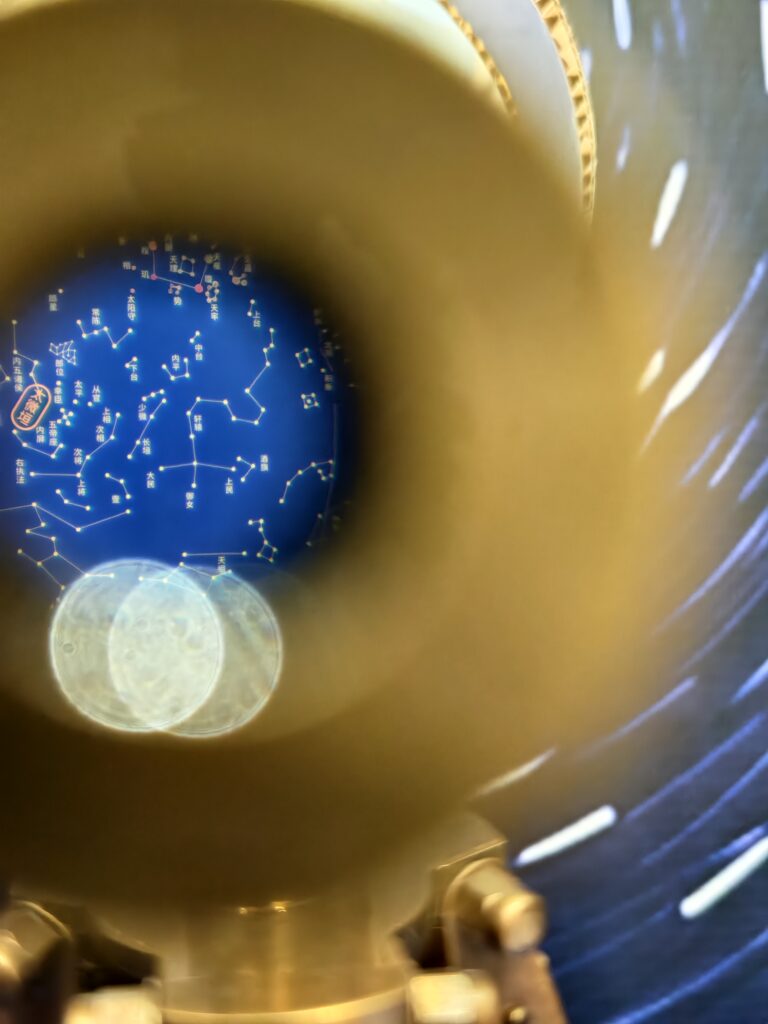
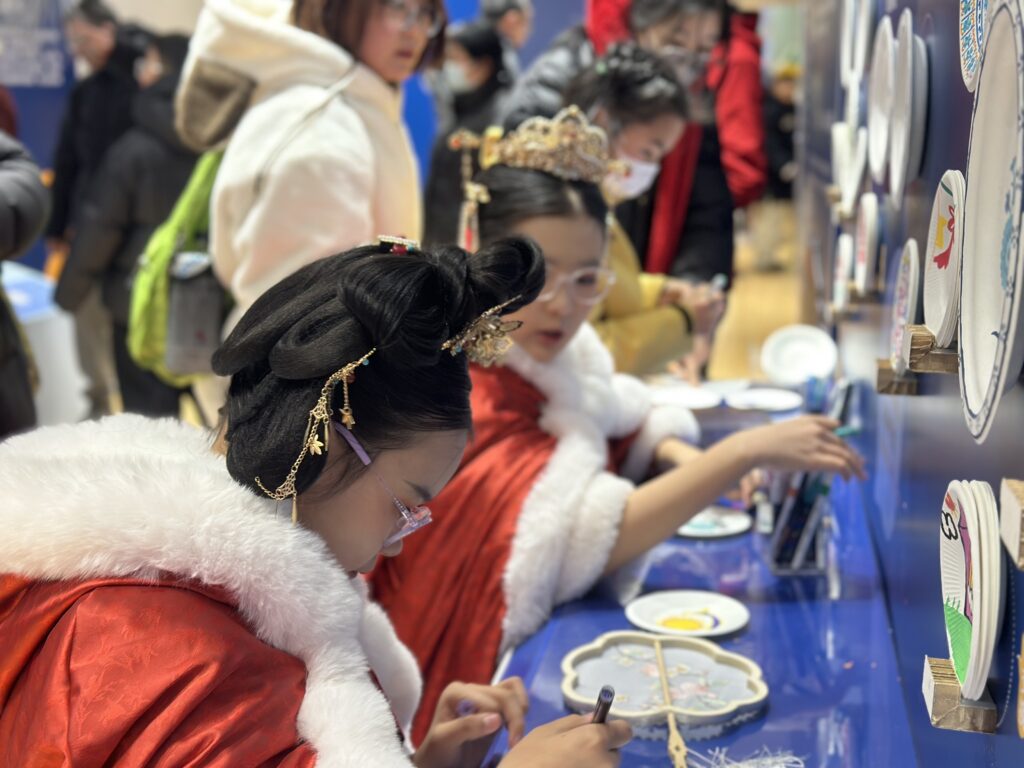
Every small exhibit in the zone embodies a dialogue between the East and the West. A prime example is the first stop upon entering: we have created a space where visitors can gaze at ancient Chinese star charts through Western telescopes, an experience that has proven immensely popular. There is also an exhibit aptly named Communication: we collected export porcelain artworks created by the public in advance and host on-site creative workshops for this very theme. Visitors can experience creating their own works, then hang their pieces on the exhibition wall and take home one created by a previous visitor, truly partaking in a meaningful act of exchange.
Green: Ecological Wisdom of Harmony Between Humanity and Nature
Green is the color of life. Drawing inspiration from the imperial gardens, ancient cypresses and green glazed eave tiles of the Forbidden City, this zone explores the enduring ecological philosophies of “harmony between humanity and nature” and “planning for future generations” that have been passed down in China from ancient to modern times.
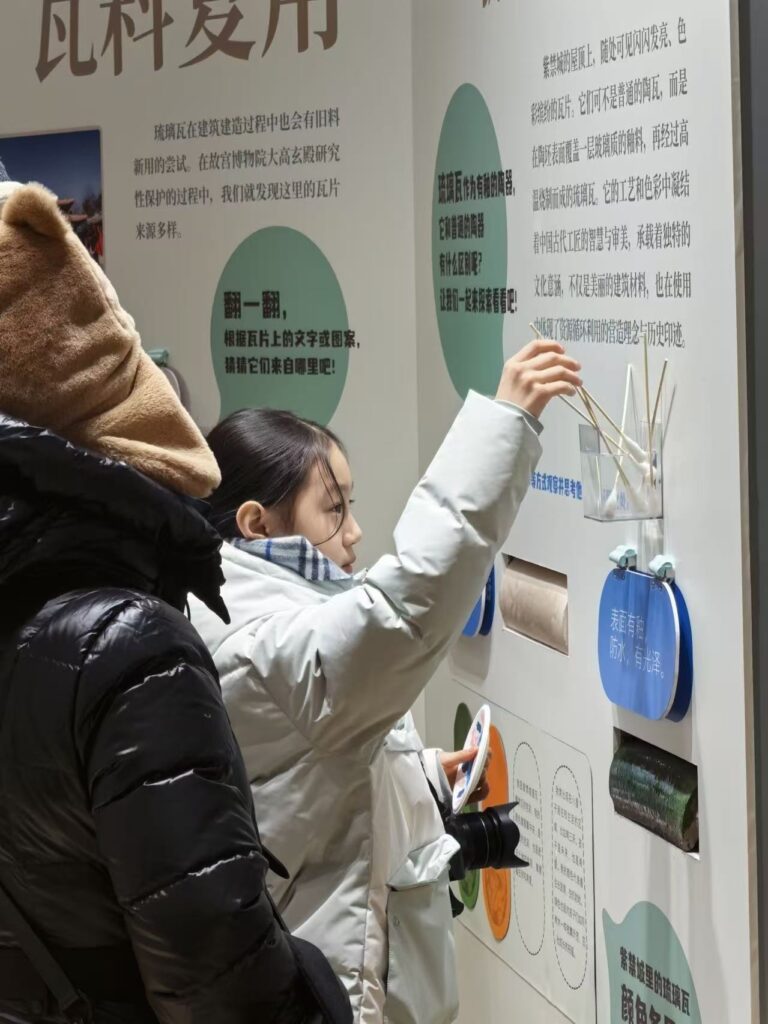
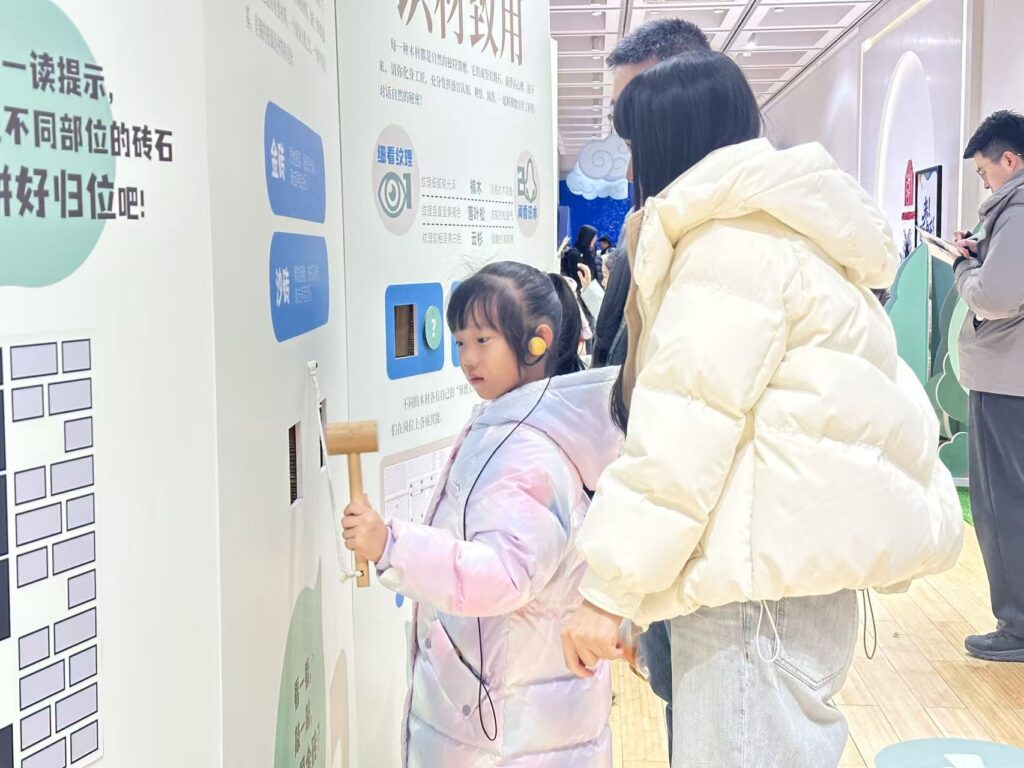
The zone features stories of how people in ancient times adapted materials to local conditions and recycled them in aspects such as architectural construction and craft-making within the Forbidden City. It also showcases the scientific principles and ecological stories behind the modern Forbidden City’s sustainable practices, including green museum development, environmental improvement, carbon emission reduction, the creation of sustainable cultural and creative products, and the promotion of eco-friendly concepts.
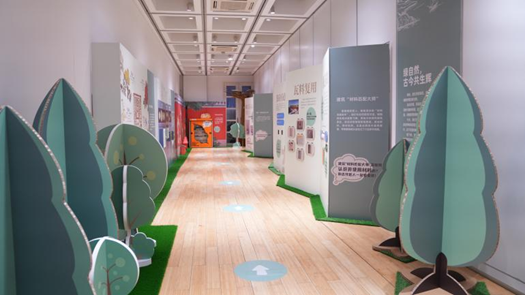
Throughout the zone, visitors are invited to engage with multi-sensory experiences: touching materials, tapping and listening, smelling natural scents, and doing simple experiments to learn about traditional and sustainable materials firsthand.We also have integrated NFC technology into the zone, allowing visitors to listen to the sounds of birdsong on site.
Outdoor Art Installations: Co-Creation as the Core Expression of the Exhibition
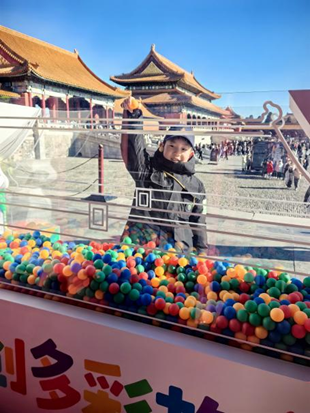
There are two outdoor exhibition zones, themed Cai (Color) and Bai (White) respectively.
Cai explores the mixture of the three primary colors of pigment. It showcases artistic works co-created by the Palace Museum with schools and communities over the past decade, each piece embodying people’s perceptions and understandings of the Palace Museum.


Bai is centered on the mixture of the three primary colors of light and serves as the core co-creation zone for the community. We provide colorful balls in red, yellow, blue and green, inviting visitors to the Palace Museum to throw the balls—letting them experience and join in the safeguarding of the Palace Museum’s cultural heritage through this interactive act.
How to Explore the Exhibition?
Light or in-depth, solo or family-friendly—the choice is yours!
In-depth Exploration: Answer Questions to Claim a Seed Bag
Explore each themed zone in turn, join the co-creation activities, complete the learning sheet by answering questions, and you’ll get a Mystery Seed Bag.
Family Game: Little Hands Hold Big Hands
Family visitors can use the family-friendly learning sheet to check in through fun games and enjoy a wonderful family time together.
Free-style Experience: Pick Any Color
Start your journey from any zone and embark on a personalized immersive color walk through the Forbidden City.
Lightweight Interaction: One Toss, One Participation
Grab a colorful ball at the outdoor “Co-Create a Masterpiece” Zone, toss it into the art installation, and become a guardian of the Forbidden City.


This exhibition is more than a display — it is a playful, multi-layered experience for all ages. Visitors can explore lightly or in depth, and most of all, simply enjoy and connect with the Forbidden City in a fun, new way.
For more information about the exhibition and its supporting materials, please refer to the link below:
https://mp.weixin.qq.com/s/NYBs7PdjVtnISOPJxvPk5g
https://mp.weixin.qq.com/s/vLFJOXYcYLgamc6c0LnMyQ
Online orientation(Now got more than 4.39 million hits)
Full Exhibition:https://mp.weixin.qq.com/s/vyxaghO2TnfXUJZXO3AllA
Red Zone:https://mp.weixin.qq.com/s/tIItKRBnvpc-M2YsiH3KwQ
Yellow Zone:https://mp.weixin.qq.com/s/OdIVsaE39G1K7cfj0PsGdg
Blue Zone:https://mp.weixin.qq.com/s/3CR2W0JzCNTRPXkGPi5MBg
Green Zone:https://mp.weixin.qq.com/s/LRlg5UF3WrJPif1p-DWRlw