
Behind the Scenes: Discovering the Hidden World of the British Museum
Written by Jalil Khan, Archaeologist, Department of Archaeology and Museums (DoAM), Government of
Pakistan (Pakistan, ITP 2026)
Hello everyone! My name is Jalil Khan, and I am an archaeologist at the Department of Archaeology and Museums, Pakistan. One of the reasons I was excited to join the British Museum’s International Training Programme was the opportunity to learn from museum professionals across the world and bring new ideas back home.
After three days of getting to know one another through lectures, discussions, and shared experiences, Day Four felt like opening a new chapter. Our group of 22 fellows was divided into departments, and the five of us from Asia headed to the Asian Department for a behind-the-scenes visit with Alexandra Green, Curator of Southeast Asia Collections.
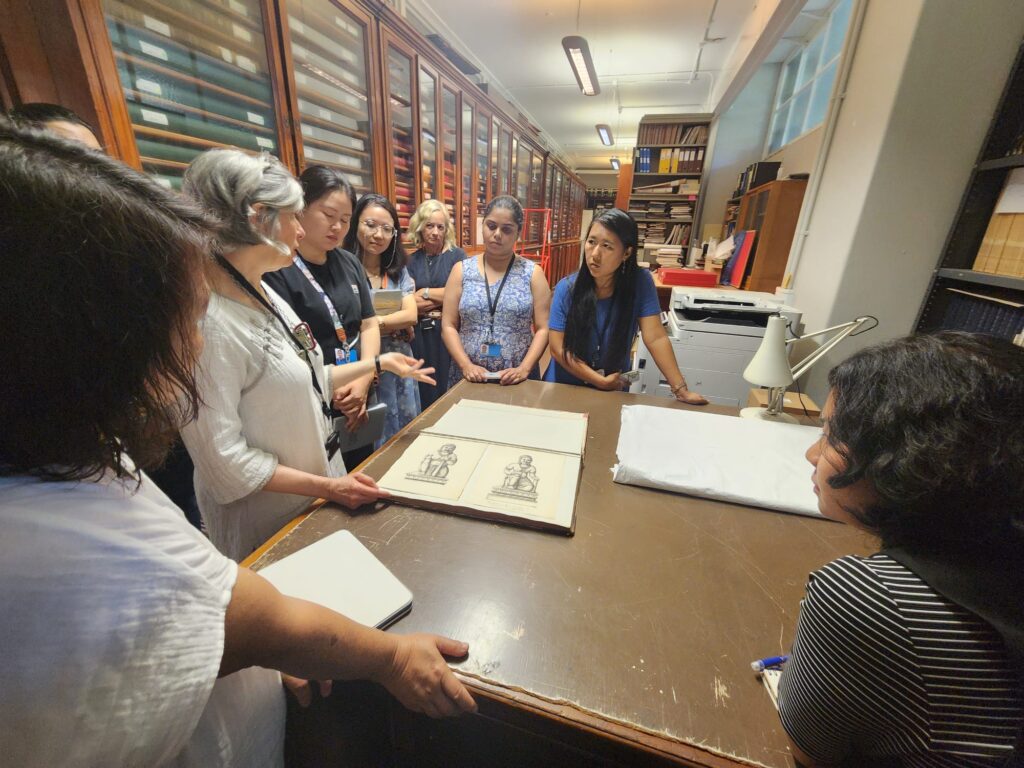
Walking into the museum’s storage areas felt like stepping into a world that most visitors never get to see. Among the highlights was Sir Thomas Stamford Raffles’ collection of Javanese artefacts, including beautifully carved wooden masks and the famous wayang shadow puppets. Every shelf seemed to have a story waiting to be discovered.
But if I’m being honest, it wasn’t only the objects that caught my attention, it was the storage itself. We explored digitally managed stores as well as enormous rolling racks that glide open to reveal row after row of carefully preserved collections. Watching them in action, I couldn’t help thinking how much space they save and how practical a system like this could be for museums in Pakistan.
Another memorable moment was visiting one of the British Museum’s oldest storage areas, dating back to 1824. It was fascinating to stand in a space that has been protecting collections for more than two centuries while also learning how today’s museum combines that long history with modern collection management through its database system.
The visit reminded me that what visitors see in a museum is only part of the story. Behind every gallery is an enormous amount of planning, organisation, conservation, and teamwork that makes those public experiences possible. For me, the greatest takeaway was not just discovering remarkable collections but seeing practical ideas that could strengthen museum work back home. Sometimes, the most inspiring part of a museum isn’t on display, it’s hidden behind the scenes.