
Collections Context and Connection: Reflections from Oxford
Written by Akosua Saah Buckman, Principal Curator, Ghana Museums and Monuments Board (Ghana, ITP 2026)
Hi, I am Akosua Saah Buckman, a curator with the Ghana Museums and Monuments Board. I am excited to be part of ITP 2026. For me, this programme is more than professional development—it is an opportunity to experience new museum spaces, learn best practices, and connect with colleagues from diverse backgrounds. I hope to take home fresh ideas in collections care, community engagement, exhibition development, and museum leadership that can be adapted to the Ghanaian museum context.
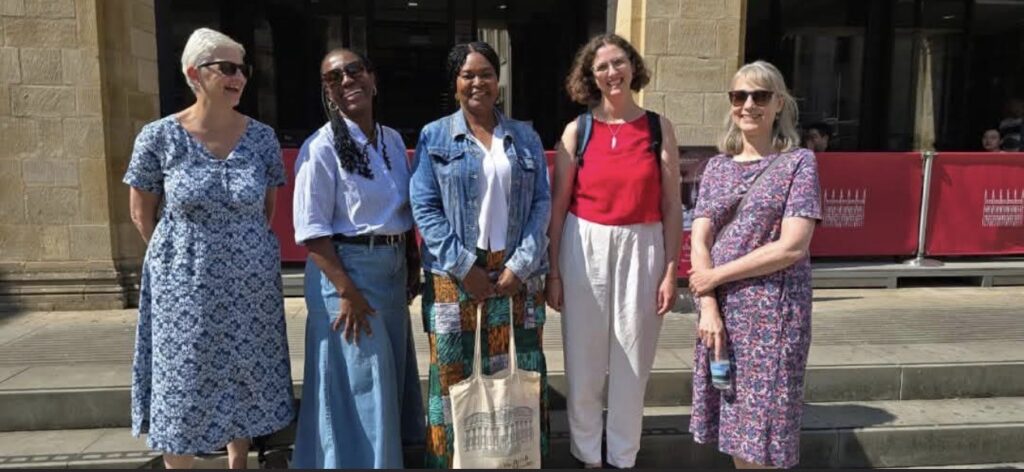
July 15 was Department Day, and I was especially excited because it was “an Oxford day”. I had heard so much about its historic streets, stunning architecture, and world-renowned museums that I couldn’t wait to experience it for myself. On this day, with Pamela, an ITP fellow from Nigeria, our British Museum partners, Julie, and Helen from the Africa, Oceania and the Americas (AOA) Department and we set off for what I thought would simply be a visit to the Pitt Rivers Museum. Instead, it became a day of meaningful conversations, unexpected discoveries, and fresh perspectives on museums.
Before arriving at the museum, we took time to enjoy Oxford itself. We passed the magnificent Ashmolean Museum and wandered through streets lined with the University’s famous colleges. Their honey-coloured stone buildings, elegant arches, and quiet courtyards made it feel as though history was alive around every corner.


Our main destination was the Pitt Rivers Museum. Hidden behind the Oxford University Museum of Natural History. Walking through the soaring Victorian halls of the Natural History Museum with its towering dinosaur skeletons, intricate ironwork, and glass roof was an experience in itself before stepping into the unique world of Pitt Rivers. The moment I entered the Pitt Rivers Museum, I understood why it is so admired by museum professionals. Rather than organising collections by geography or time, objects are displayed by typology. A fishing hook from Africa might sit beside one from the Pacific, encouraging visitors to compare how different cultures solved similar challenges. It was a fascinating way of revealing both our diversity and our shared humanity. One moment that particularly stayed with me was finding an object made in 1949 by a boy from a town near my hometown of Obuasi. Thousands of miles from Ghana, I unexpectedly found a personal connection that reminded me how museums can bring the world closer together. Another feature that impressed me was the object labelling. Instead of separate display cards, many labels are attached directly to the objects, allowing each piece to carry its own story. As a curator, I found this approach simple yet incredibly effective in creating a more personal connection between visitors and the collections.
We also met Marina de Alarcón, Curator and Collections Manager, and her team, who shared the museum’s future plans. They explained how Pitt Rivers is gradually introducing more provenance-based displays while preserving its iconic “cabinet of curiosities” atmosphere. It was inspiring to see how the museum is balancing contemporary interpretation with its historic character.
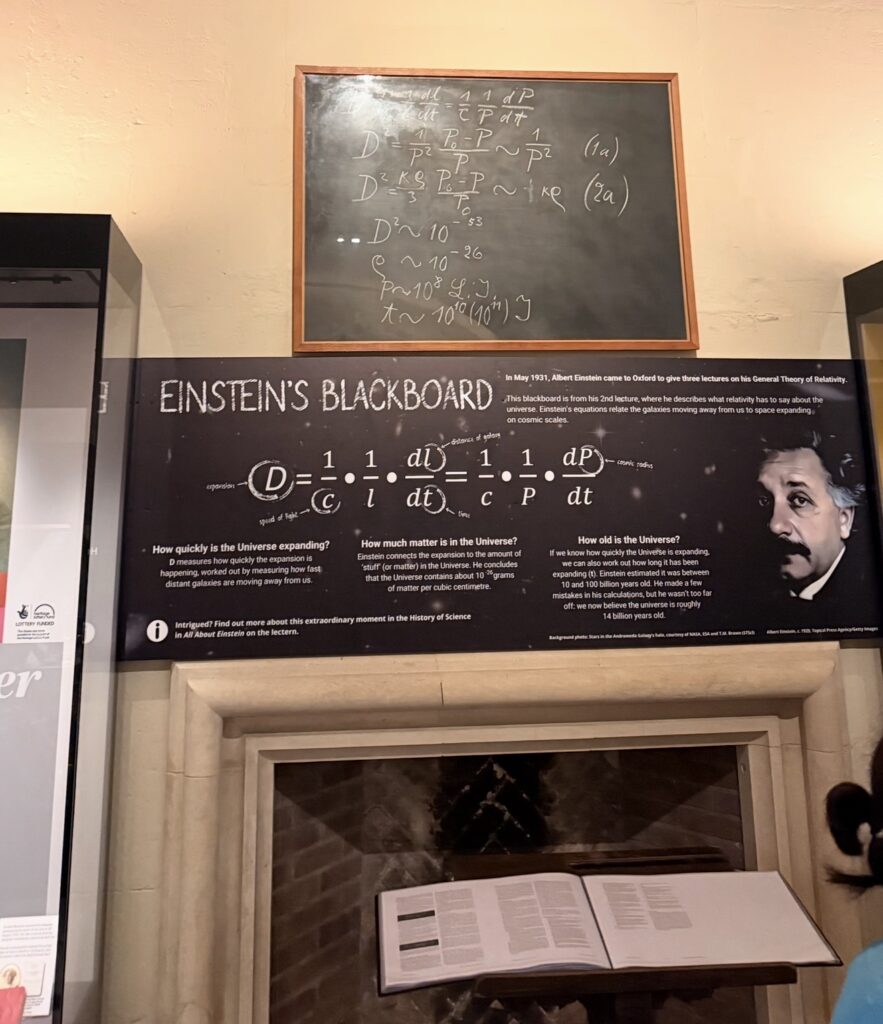
We visited the Museum of the History of Science. Though small, it housed remarkable treasures, including Albert Einstein’s original writing board, still marked with his chalk calculations a definite highlight of the day. We then explored Pets and Their People, an exhibition that traced the evolving relationship between humans and animals through history.
As we said goodbye to Zoe, our Oxford host, I realised the day had been about much more than museum visits. It was a reminder that the greatest value of collections lies not simply in the objects themselves, but in the stories they tell, the connections they create, and the conversations they inspire.