
Glasgow: History, People, and Dreich
Written by Kumar Zhunussov, Head of International Relations Department, National Museum of the Republic of Kazakhstan (Kazakhstan, ITP 2026)
Hello everyone! My name is Kumar Zhunussov, and I am the Head of the International Relations Department at the National Museum of the Republic of Kazakhstan.
Taking part in the International Training Programme (ITP) holds a very special, twofold significance for me. First, I have the honor of being the very first participant from Kazakhstan in the history of the programme. Second, this year ITP is celebrating its 20th anniversary! And I would like to congratulate the entire British Museum ITP team, as well as all participants from this year and previous years, on this anniversary!
I want to tell my story about this chapter of the ITP journey through three main lenses: history, people, and nature. And this story is not about just one day but whole days spent in Glasgow.
Surprisingly, even though Glasgow is relatively close to London, the weather here is strikingly different. The city welcomed us quite pleasantly, with partly cloudy skies. Sometimes gray, low-hanging clouds covered the sun, and sometimes the sun peeked through. Yet at first, when I checked the forecast, a light touch of melancholy washed over me: “Oh, what a shame! A new city – and a whole week of rain ahead!”. Scottish people call it as Dreich.
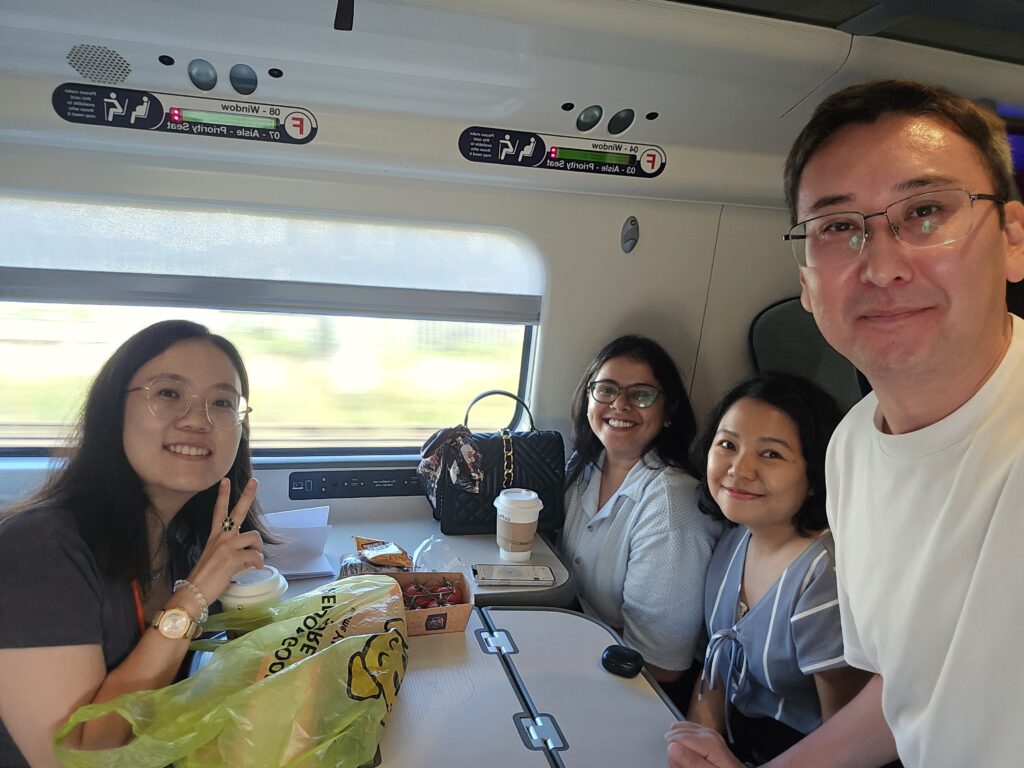
However, any gloom was instantly dispelled by Ed our incredibly positive and simply wonderful host, who managed to make us fall in love with Glasgow during our stay. We were also accompanied by the lovely Claire Messenger. Settling in quickly, we immediately began preparing for the ten exciting days ahead.
Our museum story began with The Burrell Collection. 9,000 objects! From Ancient Egyptian artifacts to exquisite Chinese porcelain, from medieval tapestries, armor, and sculptures to masterpieces by Manet, Degas, and Cezanne. It is something you simply have to see with your own eyes! By the way, The Burrell Collection – along with eight other museums is part of Glasgow Museums, whose total collection comprises an impressive 1.2 million items.
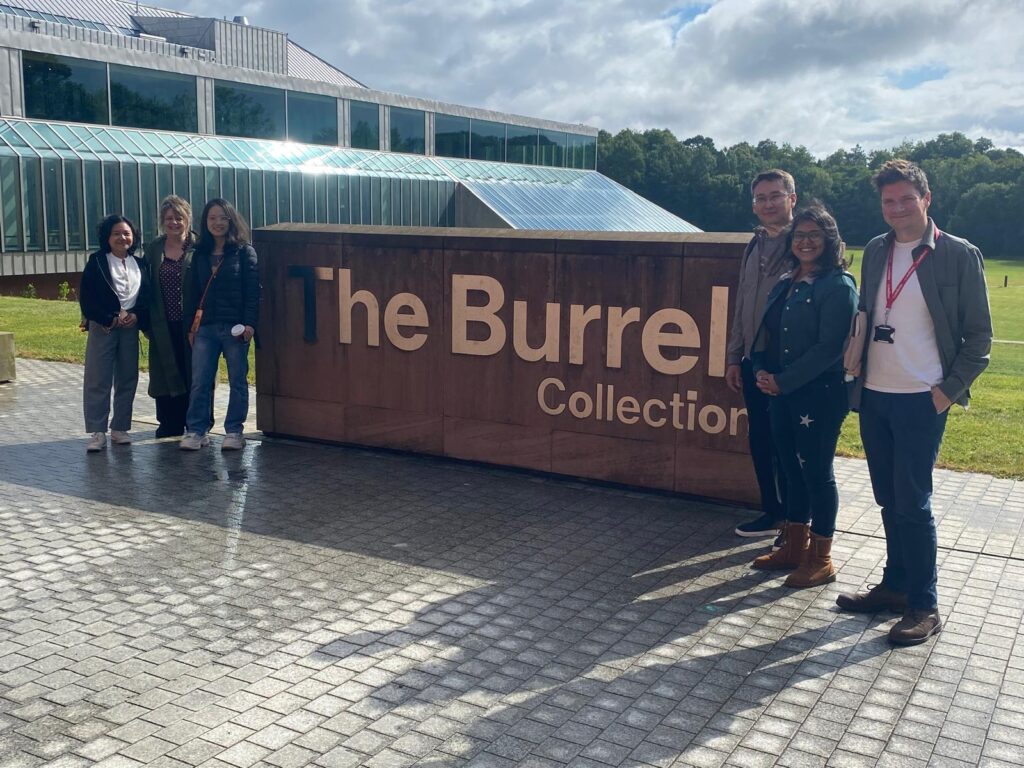
The Burrell Collection is situated in the Pollok Country Park. And the history of collection starts from 1830s when Sir William Burrell started to buy different objects. In 1944, Sir William and his wife donated their entire collection to the city of Glasgow. But there was a catch: to protect delicate tapestries and stained glass from the city’s industrial smog, Burrell stipulated that the museum must be built in a rural setting with clean air.
It took decades to find the perfect location. Finally, in 1983, a purpose-built glass museum opened inside the peaceful woodlands of Pollok Country Park. Designed to blend nature with art, the building features floor-to-ceiling windows and original medieval stone arches integrated into its walls. In 2022 after a major green transformation, it was reopened.
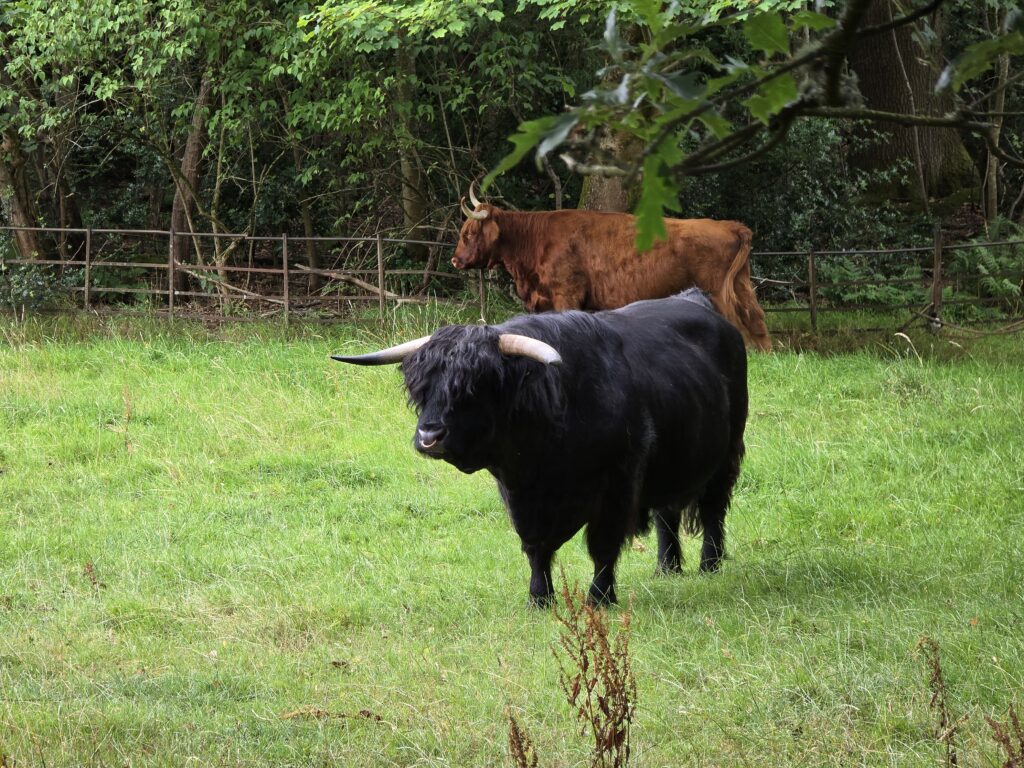
Walking a few meters from the Burrell Collection building, you can see Highland cows grazing on emerald meadows. After being filled with history inside the building, everyone has the chance to just sit and watch the grazing animals, admire the birds, breathe in the fresh air under the Scottish rain, and digest all the information. But we didn’t have time for that; every minute was scheduled. You could say that after visiting each museum, there was a lingering feeling that you hadn’t seen enough, had missed something, or hadn’t learned enough. And that is a great feeling to have, so that later, back in your home country, you can take your time to read and learn more about it.
On the second day, we headed to Kelvingrove Art Gallery and Museum – a true kingdom of archaeology, art, and sculpture. Salvador Dali’s famous painting Christ of Saint John of the Cross simply takes your breath away. You can spend hours here, exploring and discovering something interesting. And we visited Barbie exhibition there.


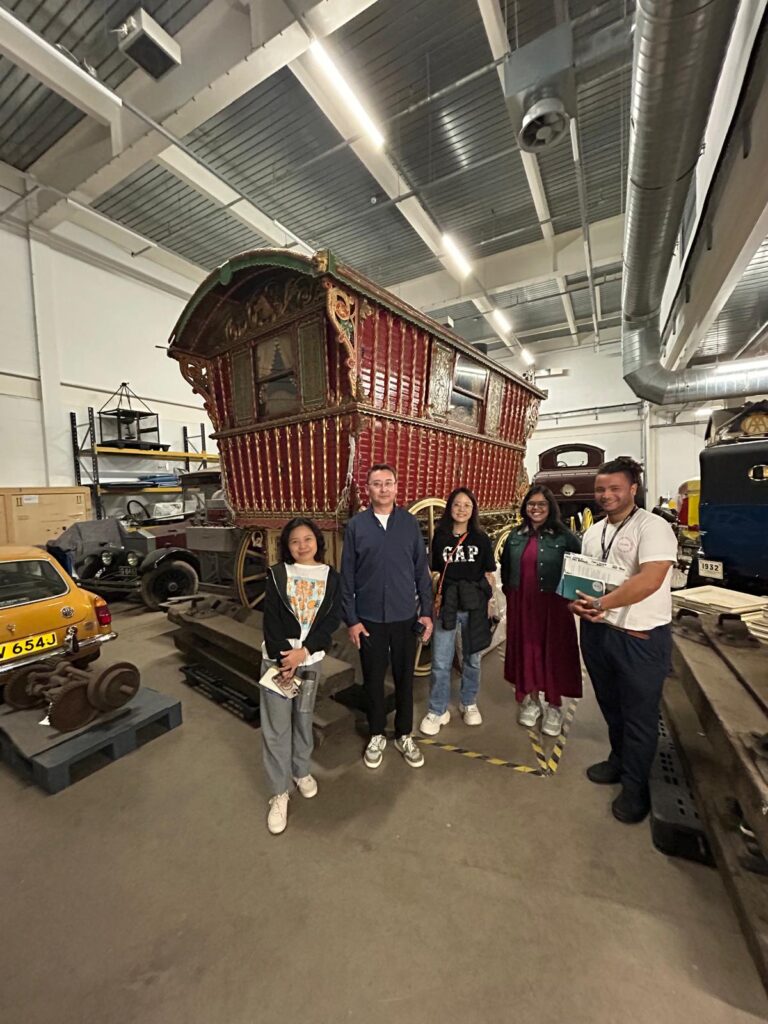
The next two days were spent at the Glasgow Museums Resource Centre (GMRC) – a massive storehouse where the majority of the city’s collection is meticulously preserved. Our guides into the world of Glasgow’s collections – JT, Alison Jones, Fiona Cairns, and Rebecca Quinton – didn’t just take us on a tour; they shared with genuine warmth how their departments operate. While we immersed ourselves in museum secrets, a light drizzle occasionally fell outside…
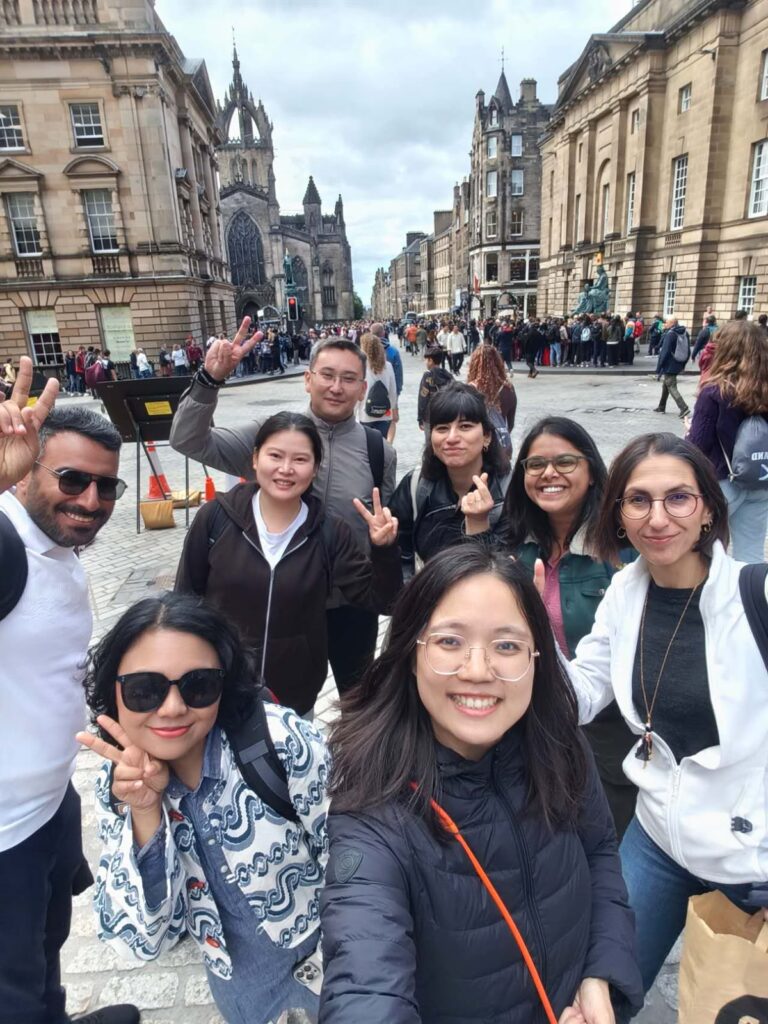
On Saturday, Edinburgh awaited us. When I shared my weekend plans, my friend Ali picked up on the idea and suggested meeting up – since his group was nearby in Newcastle. And that’s exactly what happened! Two ITP groups reunited in the capital of Scotland. It was an extraordinarily warm, emotional, and long-awaited reunion.
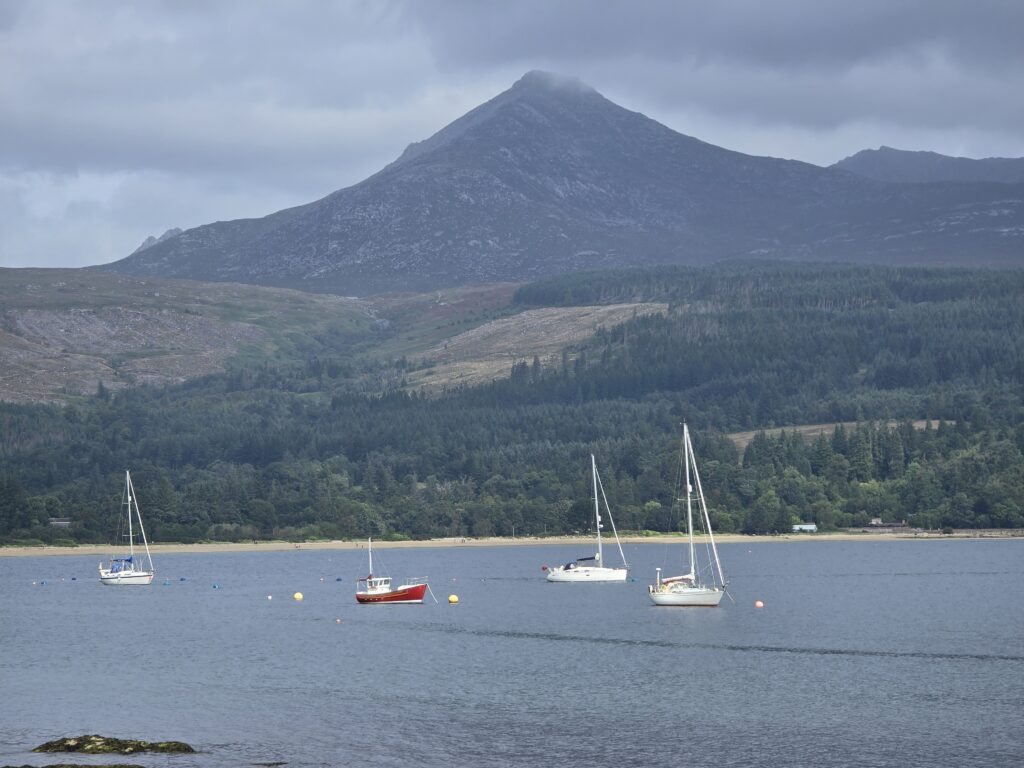
On one of our free days, I couldn’t resist going on a solo journey to the Isle of Arran. They say Arran is “Scotland in miniature.” Once I set my mind to something, there’s no stopping me: a train to Ardrossan, then a ferry to the island… I made it happen, and I will definitely dedicate a separate post to it!
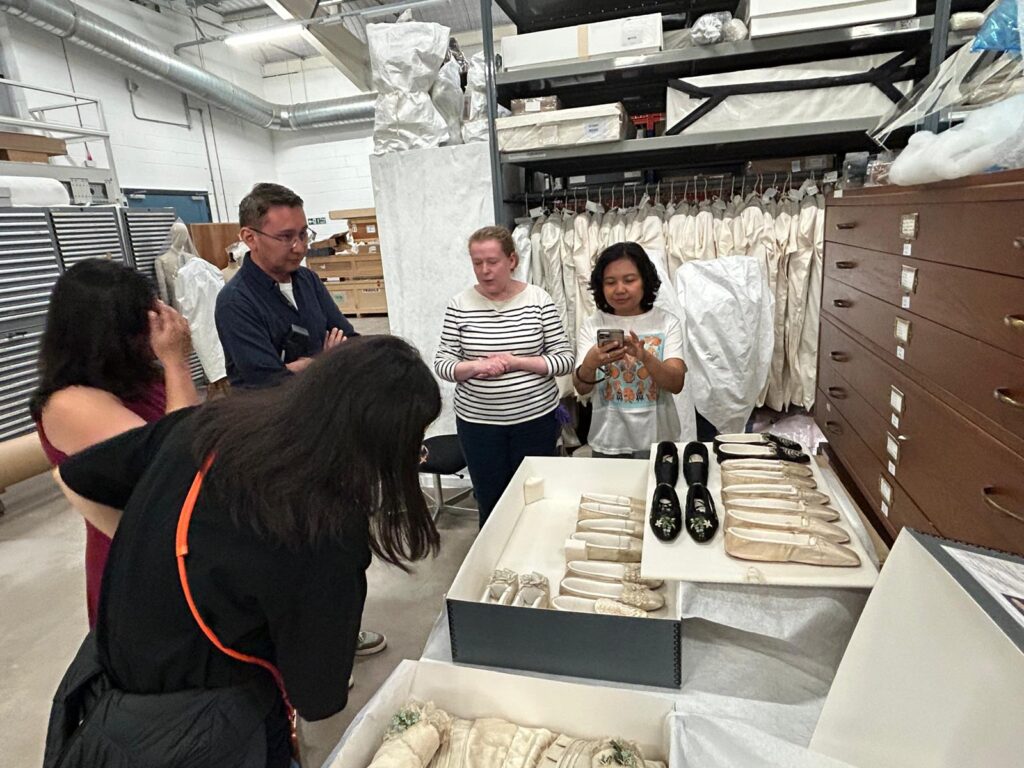
Back at the Resource Centre, we had a very rich and packed program. We learned how objects not currently on display are stored, what specialized equipment is used, and how institutional operations function overall. This was precisely what I wanted to learn more about when I submitted my application for the programme. Alison and Fiona led an insightful and incredibly engaging session on the archives and library. Meanwhile, Rebecca, who oversees the dress and textile collection, gave us an insider look at textile storage systems and revealed professional secrets of fabric conservation.


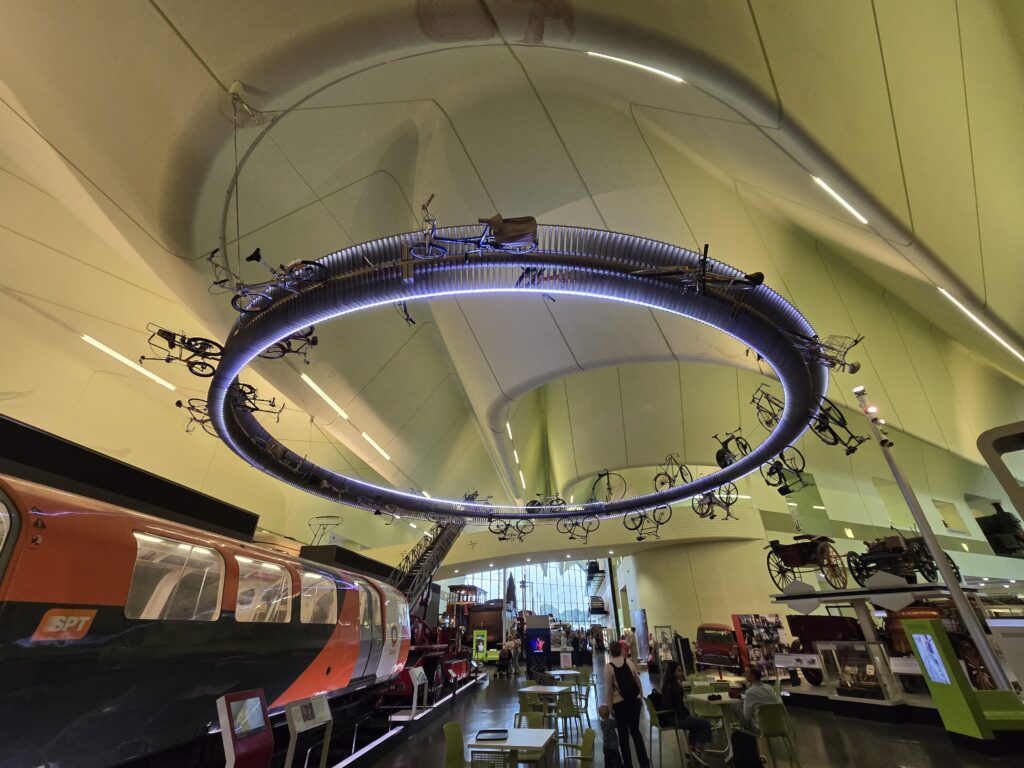
Incidentally, the Resource Centre also houses a fascinating transport collection, reflecting Glasgow’s history as a major center for shipbuilding and industry in Scotland. In Riverside Museum that we visited in one of our days we had a tour by the transport museum. Yes, the name is the Riverside Museum, but it is a museum about trams, ships, trolleybuses, and other vehicles. The concept of the museum itself is interesting. It leaves a mixed impression, but as the saying goes, “there’s no accounting for taste,” and to each their own. In the center of the building, hanging from the ceiling, there is a bicycle installation shaped like a Möbius strip. And the architecture of the museum was created by Zaha Hadid, the visionary Iraqi-British architect.
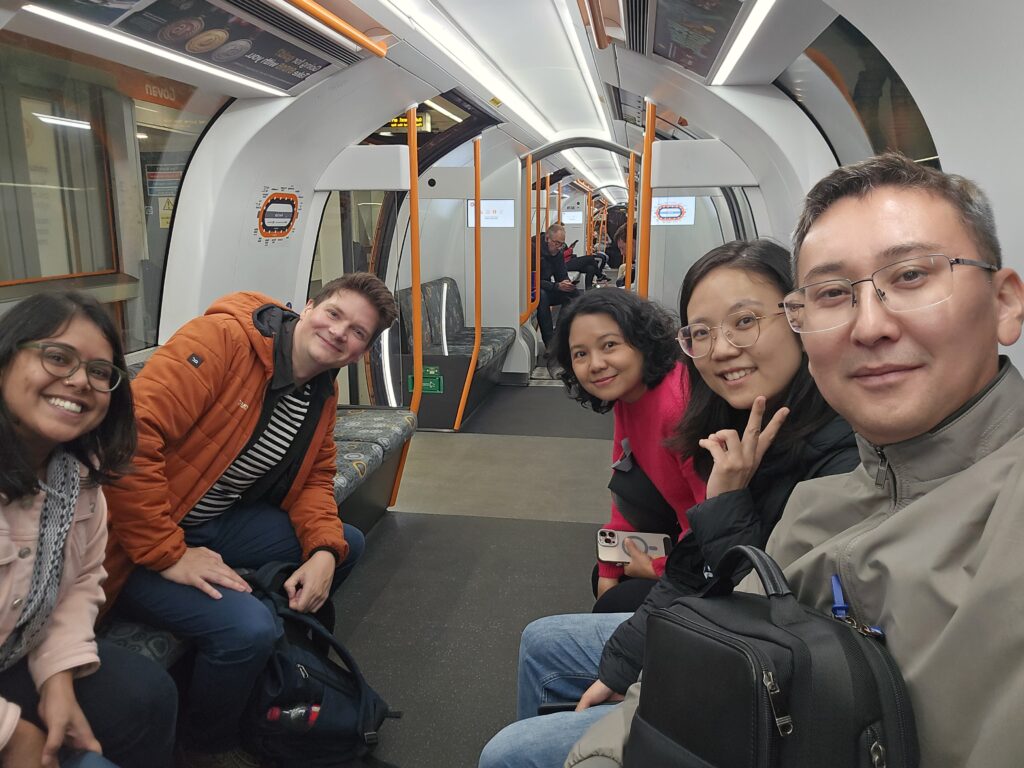
By the way, the Glasgow Subway is really cool! It only has one line – or rather, a single loop. If you wanted to get lost on it, it would be practically impossible!
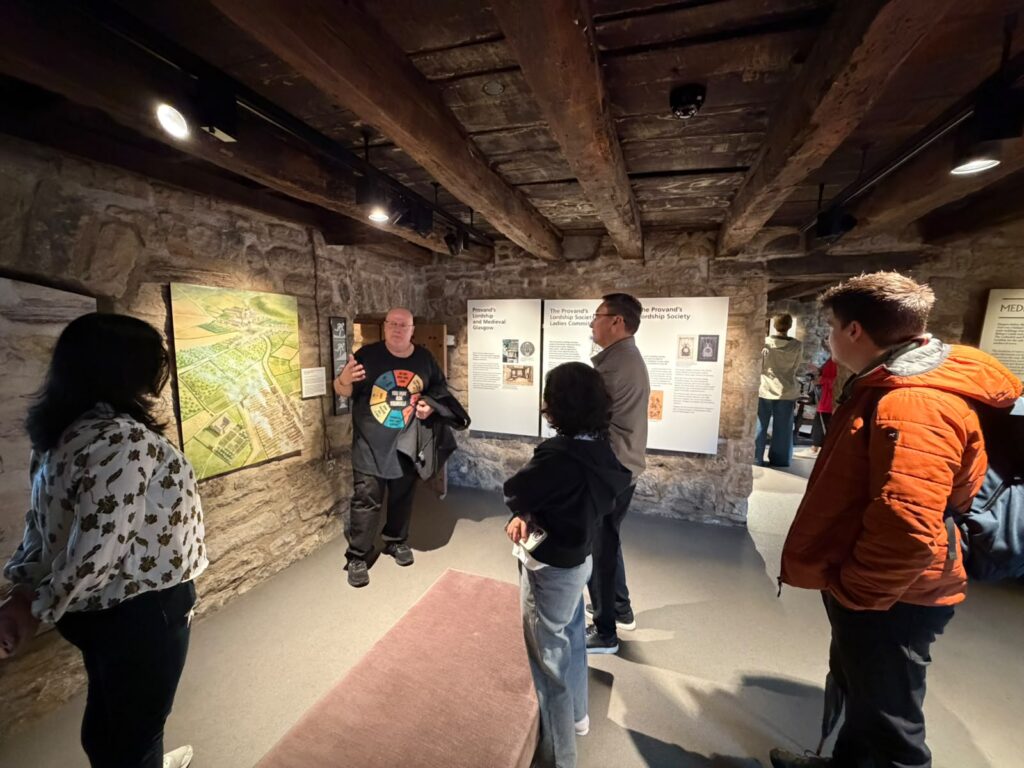
On our final day, we visited Provand’s Lordship – the oldest house in Glasgow, built in 1471 and preserved to this day thanks to local enthusiasts. Strolling through its rooms with original 17th-century Scottish furniture and visiting the cozy medicinal herb garden allowed us to touch the city’s medieval past. No historical site truly comes alive without a passionate guide, and Anthony, Curator of Scottish History, was the absolute highlight of our visit to Provand’s Lordship.
Our day continued with a visit to the majestic gothic St Mungo’s Cathedral and the St Mungo Museum of Religious Life and Art.
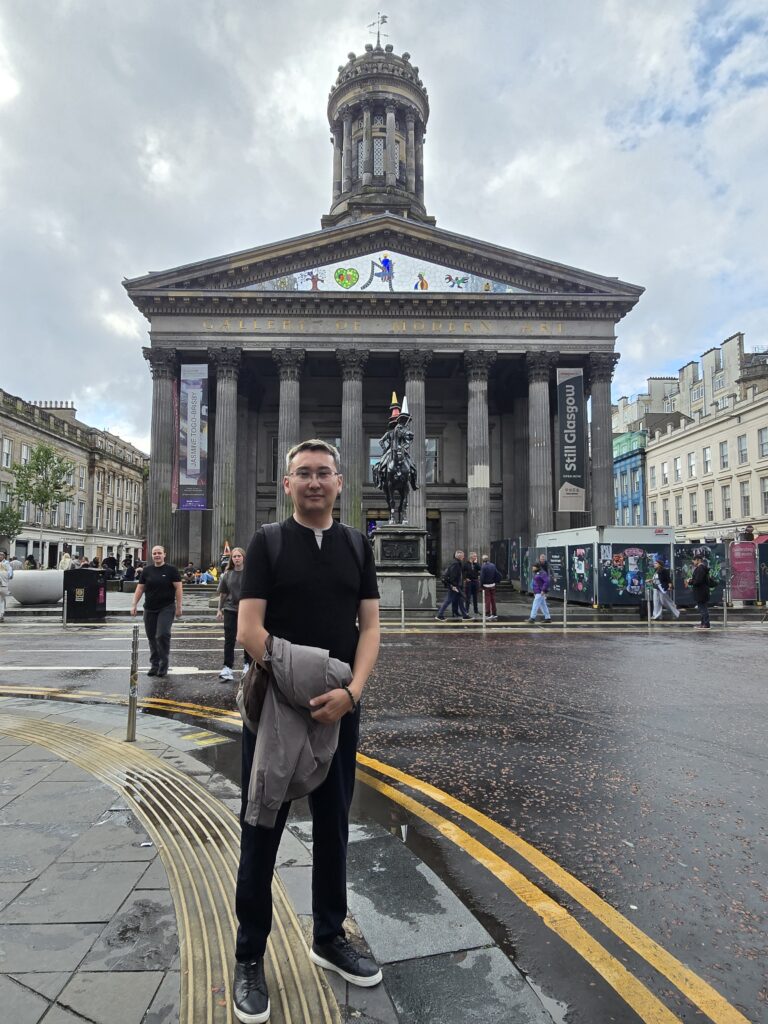
The wonderful Katie gave us a detailed overview and guided tour through the Gallery of Modern Art (GoMA). Over a cup of tea, we learned about the history of the building housing GoMA, current and past exhibitions, the collection itself, and their experience collaborating with artists.
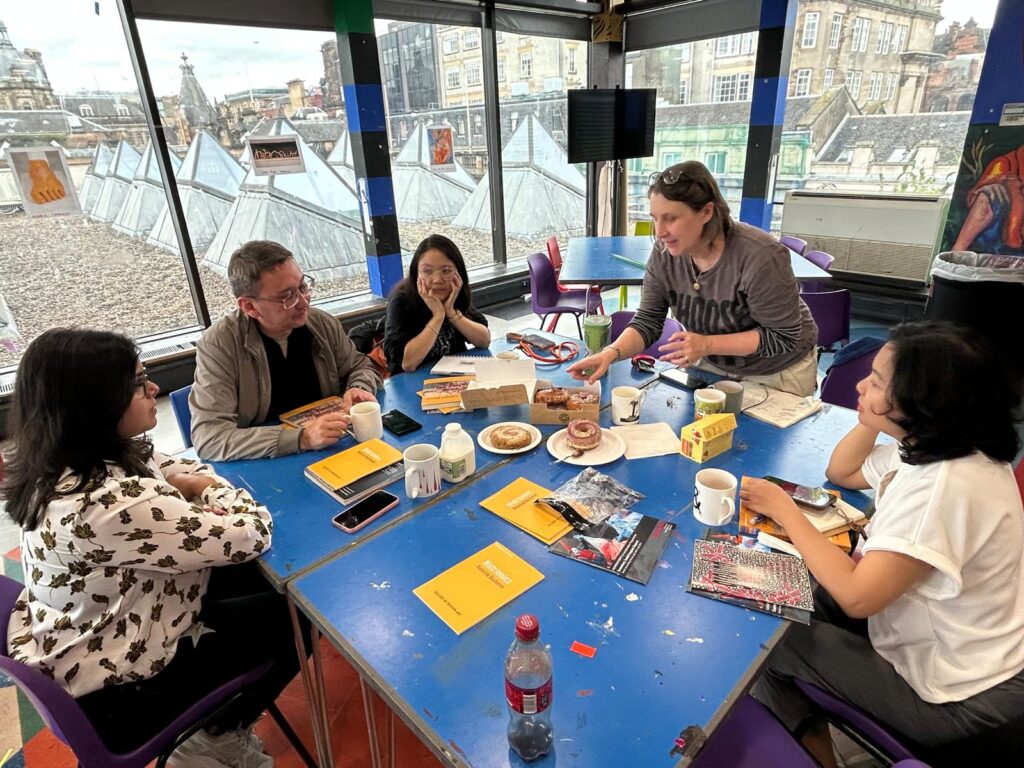
Unfortunately, it is impossible to fit everything into a single blog post or to mention every single person who brought warmth to our days here. The people in Glasgow are really kind and warm. People Make Glasgow – this slogan perfectly captures the genuine warmth and sincerity of the city’s residents.
I am also profoundly happy to have shared this journey with fantastic Mandara from India, Su Latt from Myanmar, and Wang Li from China.
As I write these lines on the train taking me from Glasgow back to London, I feel a strange sensation – as if I am being torn away from something deeply familiar and dear to me.
And aye… I have truly grown to love those rainy Scottish days!