
A Day of Discovery in Newcastle
Written by Ali Hasan Khudhair, Manager of Ancient Writing Department, State Board of Antiquities and Heritage, Iraq Museum (Iraq, ITP 2026)
Hello, my name is Ali Hassan Khudhair and I work as the Head of the Ancient Inscriptions and Cuneiform Tablets Department at The Iraq Museum in Baghdad.
Working with antiquities in a country that witnessed the birth of the earliest civilizations and the invention of writing and the wheel brings immense passion. In 2018, I had the opportunity to work in the Department of Ancient Inscriptions and Cuneiform Tablets at The Iraq Museum. Throughout my eight years of working and become the head of my department, I firmly believed that developing museum practice always requires openness and the exchange of expertise with major international institutions, rather than remaining confined to a single local museum experience.
Based on a recommendation and the successful past participation of my colleague, Abdulrahman, in the British Museum’s (ITP), I applied, and fortunately, I was accepted into this outstanding programme. After three useful weeks of lectures, site visits, and knowledge gained in London, we were divided into groups, and my group transferred to the beautiful city of Newcastle, where today marks our third day.
Exploring Segedunum and Arbeia
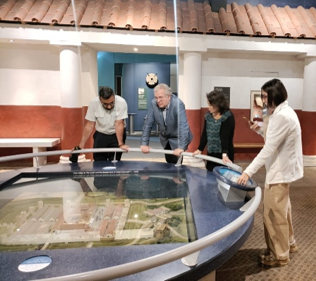
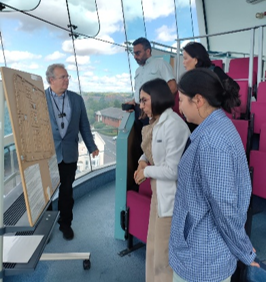
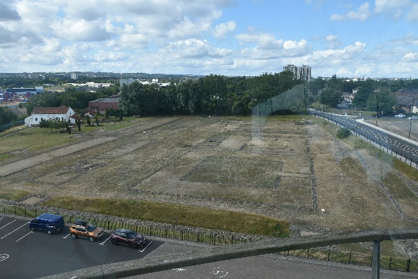
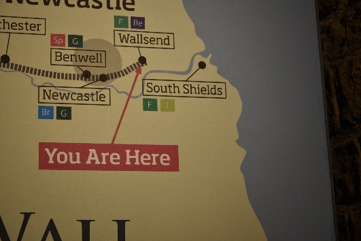
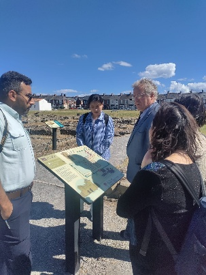
Our academic tour today began with a field visit accompanied by our colleagues, Helen and Jennie, who took us to the Metro station and brought us to the Segedunum Roman Fort, where we met the archaeologist Bill Griffiths. At the start of the visit, we toured the museum galleries, examining the displayed antiquities and the museum exhibition. We then headed with Bill to the open archaeological site. Bill spoke to about his personal experience at this site, its great historical and strategic importance in the past, and during our tour, we viewed the remains of Hadrian’s Wall connected to the fort, which provided an excellent opportunity to observe the preservation mechanisms of ancient structures.
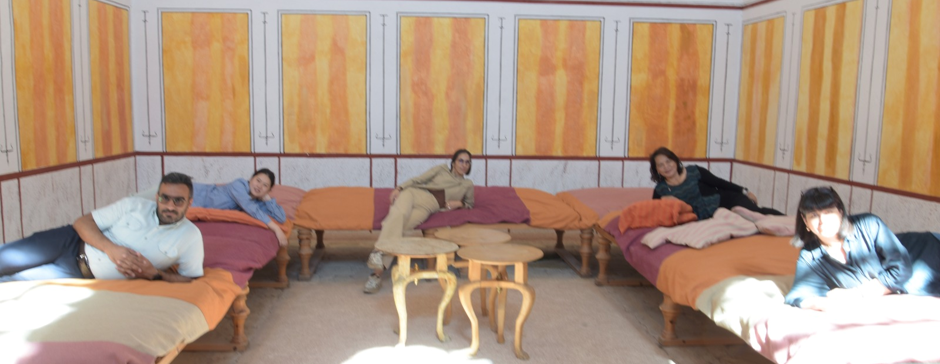
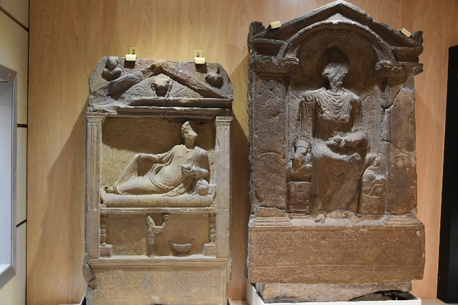
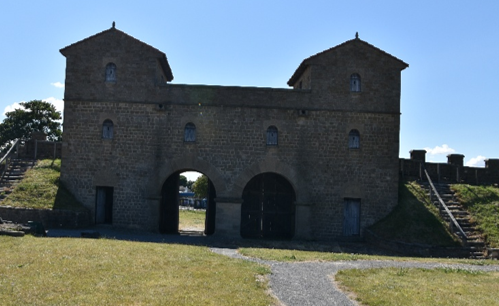
From Segedunum, we proceeded to the South Shields Museum, walking through its galleries, and then walked directly toward the Arbeia Roman Fort. At this site, Bill gave us a detailed and fascinating explanation about the extensive archaeological excavations that took place over the years, the stages of field work, and how the main gateway of the site was reconstructed based on the archaeological data and evidence retrieved from excavations. He also explained the reconstruction of the commander’s house and the soldiers’ barracks, which is a wonderful approach that grants visitors a clear opportunity to understand the details of daily life in those ancient eras. Afterward, we toured the site museum and examined the objects preserved there. What captured my attention was the presence of two ancient tombstones; one belonged to a local woman married to a soldier stationed at the Roman fort who originated from Syria, and the other belonged to a Roman soldier recruited from Africa. These two tombstones greatly aroused my research interest regarding the nature of the Roman Empire and the vast diversity in the origins of the soldiers who served under its flag. However, what made me pause and reflect even more was the name of the site itself, “Arbeia,” which actually translates to “the place of the Arabs,” providing a logical explanation for the presence of the Syrian soldier in this region.
From the Tigris to the Tyne
The real and unexpected surprise for me as a researcher in Iraqi civilization came when Bill informed me that some of the soldiers who served at this site were recruited specifically from Iraq, and they were known as the “Tigris bargemen” in reference to the Tigris River. Historical interpretation indicates that bringing them to this location was not random; since the Arbeia fort served as a major supply and logistics hub near the mouth of the River Tyne, the Romans were in desperate need of soldiers possessing an inherent and high expertise in dealing with rivers. Given that these soldiers were raised and lived along the banks of the Tigris River in Iraq, they were the ideal choice to carry out this mission.
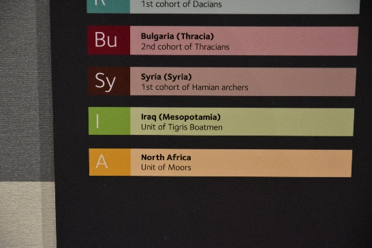
As a researcher in Iraqi civilization, I have spent years reading about these people, river navigation, and water management on cuneiform clay tablets, and I never imagined that I would travel thousands of miles to find their footprints and inscriptions recorded at a cold Roman fort in the far north of England. This visit proved to me that museums and history do not merely interpret the past; rather, they create living human connections that transcend geography and centuries, proving that human history is an interconnected network of mutual influence. We concluded this pleasant and rewarding day with a simple and casual recreational activity; we headed to the seafront to enjoy a traditional meal of Fish and Chips and a walk along the beach in the cool air, wrapping up a successful day filled with knowledge and wonderful companionship that brought together professionals from different countries around the world.