
A Day Among Horses, History and Hidden Treasures: My ITP Visit to Gressenhall Farm and Workhouse
Written by Oriyomi Pamela Otuka, Managing Curator of the National Museum of Unity, Ibadan / Zonal Head of the South West Museum, National Commission for Museums and Monuments (Nigeria, ITP 2026).
My name is Oriyomi Pamela Otuka, and I am from Nigeria. I serve as the Managing Curator of the National Museum of Unity, Ibadan, and Zonal Head of the South West Museum, under the National Commission for Museums and Monuments, Nigeria. Coming into the 2026 ITP summer programme, my expectation is to deepen my knowledge of collections care, museum storage and documentation practices, and community engagement strategies that I can adapt and apply within the Nigerian museum sector. I also look forward to building lasting professional relationships with fellow curators and heritage practitioners from across the world, and to returning home equipped with fresh ideas for preserving and interpreting our own rich cultural heritage.
Today, 3rd August 2026, our day began early and full of promise. At exactly 9:30 a.m., Louisa Wickham (Teaching Museum Manager, Norfolk Museums Service) picked us up for the 45-minute drive from Norwich to Gressenhall Farm and Workhouse, Museum of Norfolk Life, a working farm with nearly 250 years of history behind it. The site first opened its doors in 1777 as the Mitford and Launditch House of Industry, and at its peak housed as many as 670 inmates, a scale that is hard to imagine until you are standing inside the very corridors they once walked. From the moment we arrived, it was clear this was not going to be an ordinary museum visit.
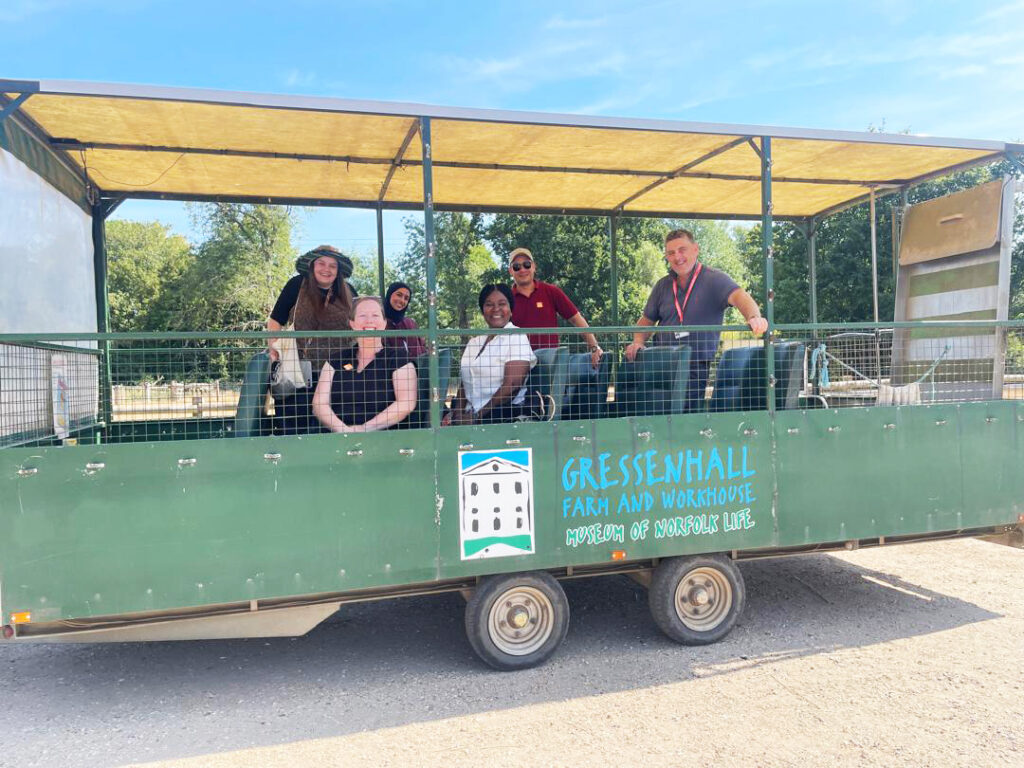
We headed straight for the farmhouse, where Carl Warren, Farm Manager, welcomed us with a ride out to the fields in his truck.
There, we met the resident horses, magnificent Suffolk Punch heavy horses, a rare and much-loved Norfolk breed, and I finally got to stroke one of the gentle giants, just five years old but already enormous. None of us had ever stood so close to a horse that size, and the excitement among the ITP Fellows was impossible to hide.
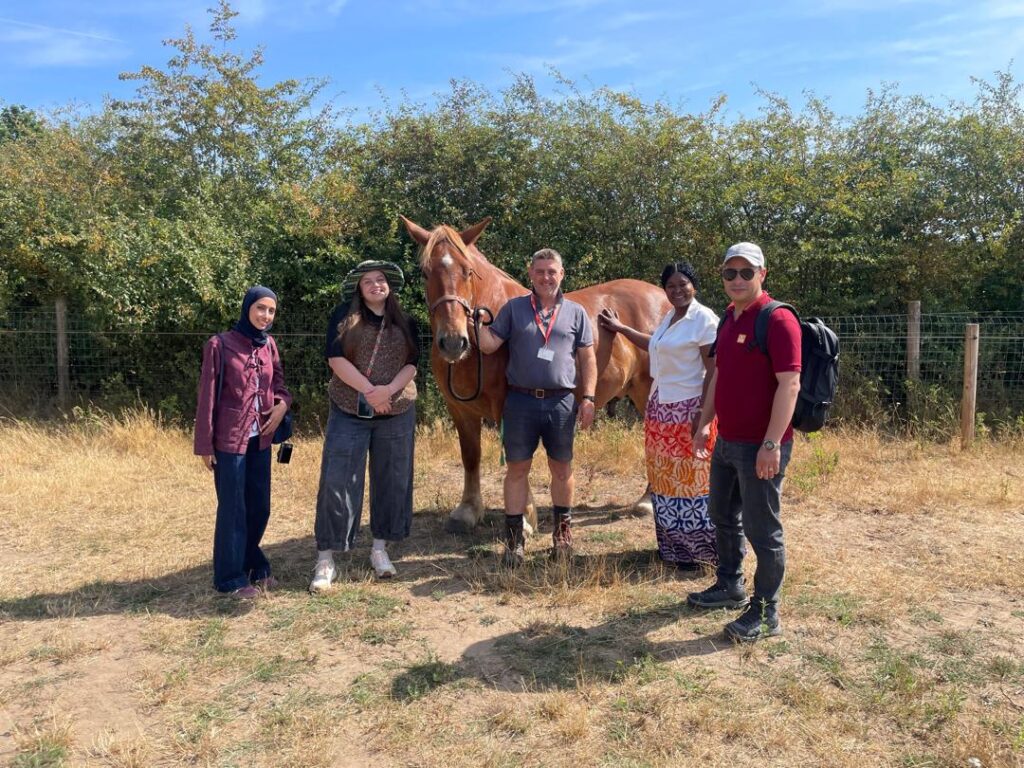
Carl told us that there are currently four recognised horse breeds kept in the UK, and watching them graze in the open fields gave us a real sense of the farm’s living history. We were also shown a flock of Norfolk Horn sheep, all female, a breed once nearly lost that Gressenhall now proudly helps to conserve. From the horses we moved to the piggery, where we learned about the care, feeding and birthing of the pigs, before pausing for a well-earned tea break.
After tea, we toured the workhouse museum itself with Hannah Jackson, and this is where the day turned deeply emotional. Housed in what was once the men’s dormitory, the Rural Life Gallery alone holds over 2,000 objects charting two centuries of Norfolk life, and every space we walked through added another layer to the story. It was the history of the workhouse, though, that stayed with us the most. Hearing how paupers were once treated, the shame, stigmatisation and punishments handed out for simply being poor, brought several of the ladies in our group to tears. Our tour guide was knowledgeable and patient, answering every question we had, and the tour ran long simply because none of us wanted to stop asking. It was thorough and honest, leaving no stone unturned.
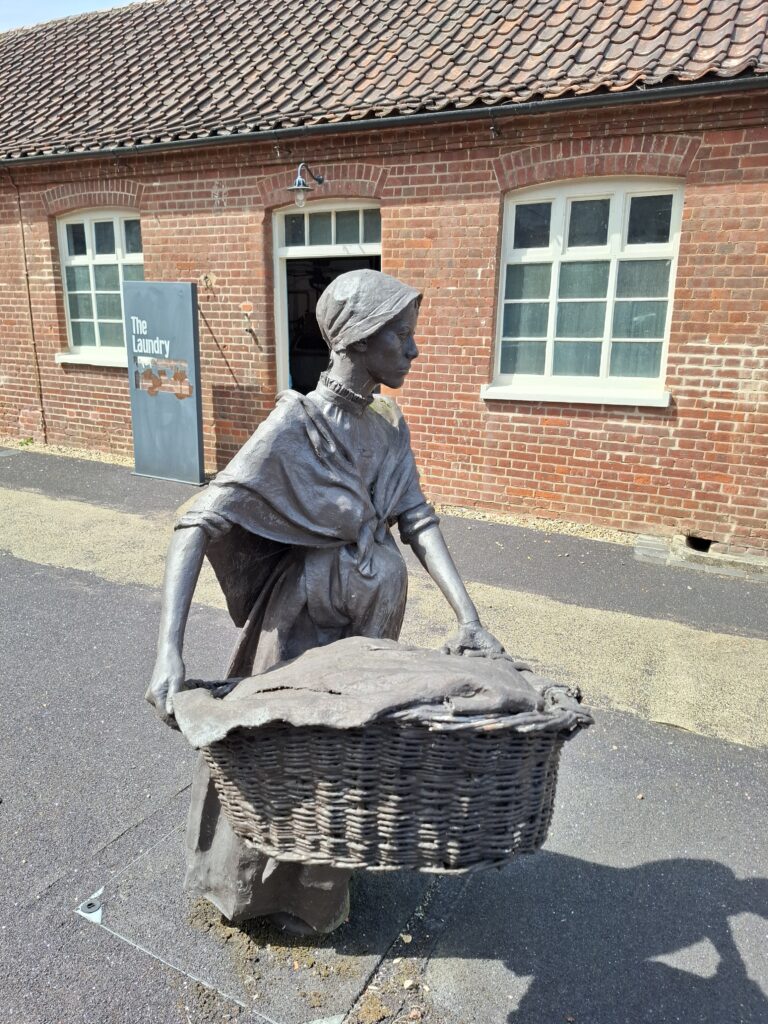
After lunch, we ate at the on-site Mardlers Rest Café before wandering through the reconstructed village school, where rows of old wooden chairs took me right back to my own childhood classroom. We also visited the local shop, a charming second-hand bookshop, and a souvenir shop, and passed a recreated cottage garden and orchard along the way. There was even a large adventure playground for children within the museum grounds, a reminder that Gressenhall is built to welcome the whole family, not just history enthusiasts.
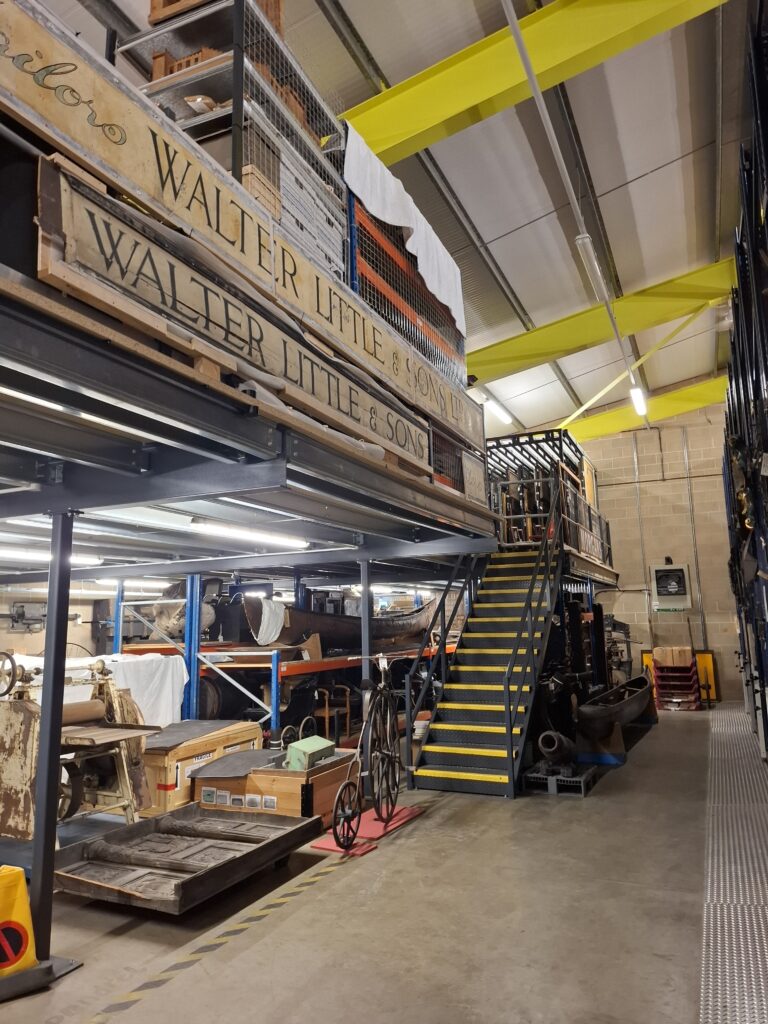
The undoubted highlight of the day, however, was our visit to the Norfolk Museums Service’s main storage facility. Imagine walking into a building that quietly holds thousands of objects belonging to the museum collection, some enormous, some tiny, all carefully catalogued. Our guide, the wonderfully knowledgeable Sade, explained that the collection is held across two stores, and that although the objects are not arranged by type, staff can locate anything instantly through the museum’s database. We talked about how the stores are cleaned, and about the dedicated volunteers who come in for deep-cleaning sessions to help preserve the collection for future generations.
None of what we experienced today would be possible without the Friends of Norfolk Museums, a membership scheme whose members have worked tirelessly over the years to support and sustain museums like Gressenhall. Their dedication was evident in every carefully preserved object and every well-told story we encountered.
We reluctantly said our goodbyes to Sade and made our way back to Norwich, full of stories, a few tears shed, and a much deeper appreciation for how rural life, welfare history and museum conservation all come together at Gressenhall.