
Museum Project Day – The Horniman Museum and Gardens: All Eyes on Her!
Written by Kataraina Poi, Assistant Guardian of Taonga Māori, Tairāwhiti Museum (New Zealand, ITP 2025) Nachanok ‘Paint’ Wongkhaluang, Curator, Queen Sirikit Museum of Textiles (Thailand, ITP 2025) Shimaa Gomaa, Deputy Director of Technical Affairs, Egypt’s Capitals Museum (Egypt, ITP 2025) and Vineet Kajrolkar, Senior Manager – Exhibitions, Museum of Art & Photography (MAP), Bengaluru (India, ITP 2025)
All Eyes on Her! looks at contemporary Egypt through the perspectives and lived experiences of women today. Using their stories as a point of entry, the exhibition invites a more people-centered approach from the Museum’s Egypt collection. In doing so, it aims to question the ways Egypt has long been framed, particularly through a European lens, and offers space for other, more rooted narratives to emerge. The show was visited by the 4 of us who have varied interests and job portfolios. Before our visit, we looked at the website and its offerings which caught the attention of some of us. It had the curatorial concept, information on why the project was chosen and other resource information like podcasts, song playlist, and a short film.
Be bold!
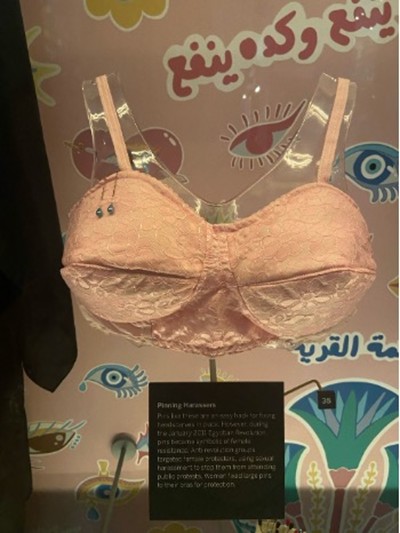
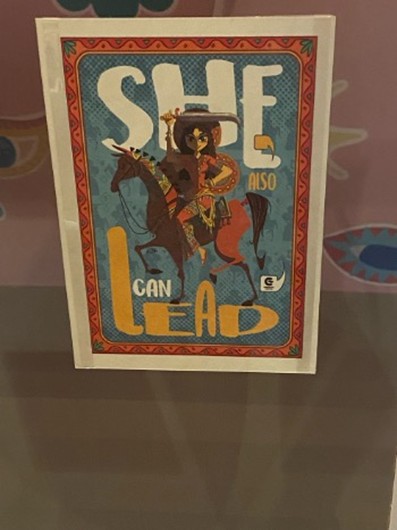
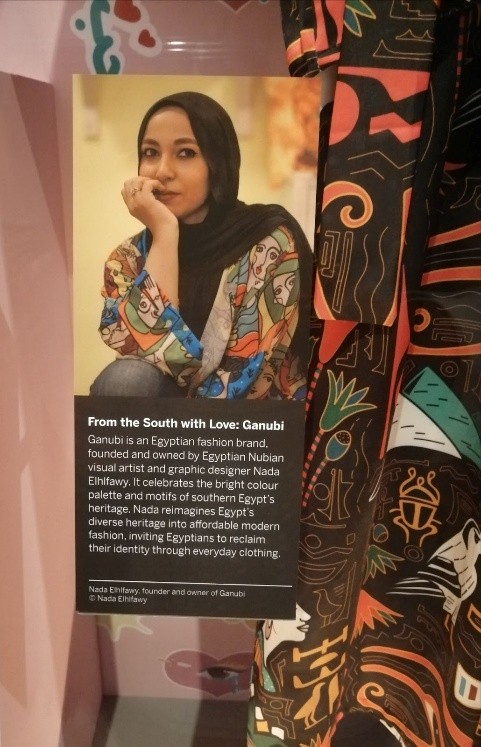
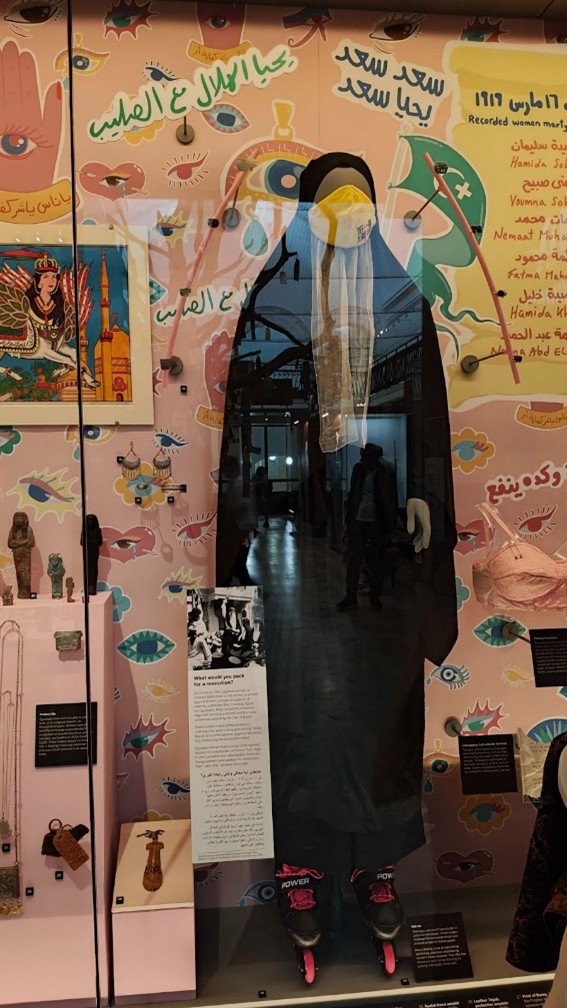
It was thoughtfully put together, mixing all sorts of mediums from traditional hijabi fashion and cultural dress, to amulets representing Egyptian goddesses, all woven into contemporary art. The pink theme running through everything really tied it together. What stood out most to me was how they used art to tell a story, reclaiming women’s empowerment in bold and creative ways. You could feel the message of resistance across the exhibition from hiding pins in bras, to reclaiming eyeliner and making indigenous beauty a social norm in a western world, and challenging traditional standards such as “dresscodes” to please community or family. It sent a strong message to young women: break away from what society expects and be true to who you are, be bold!
This exhibition wasn’t just about culture – it was about challenging norms and taking up space. My only feedback, maybe a bigger space so each piece could breathe their narrative to the audience. Other than that it delivered exactly what the artist intended. This wasn’t just a message of resistance to the western world but also to the everyday expectations of Egyptian women. It was creative, innovative, and with a mix of traditional and contemporary. I truly enjoyed it, left feeling inspired and hopeful for a future that’s more equal. – Kataraina
Rethinking the Gaze
All Eyes on Her! A phrase once used to describe public inspection of women in Egypt, becomes a lens through which we reframe the gaze, just as the women featured reclaim agency through their everyday items. What is considered an object usually tied to ‘femininity’ becomes a bigger story: women protecting women, not just with protest signs, but with bras, eyeliner, and presence.
The artefacts also challenge prevailing narratives by showing women as curators of their own bodies, crafting identity, safety, and resistance. These historical objects – worn, used, and lived – speak quietly but powerfully of empowerment.
The narrative flows well, however, the compact case space cluster artefacts and panels so tightly that my thoughts sometimes tangled. Moreover, I was struck, almost overwhelmed, by the bright pink background. It made me pause: does using soft, sweet colour design reinforce the very stereotype the exhibition wants to challenge?
Still, the display succeeds in one powerful move: all eyes are caught by them. For me, it’s not just about how women have been seen, but how we now want to be seen. – Paint
Not just a display… it’s a voice
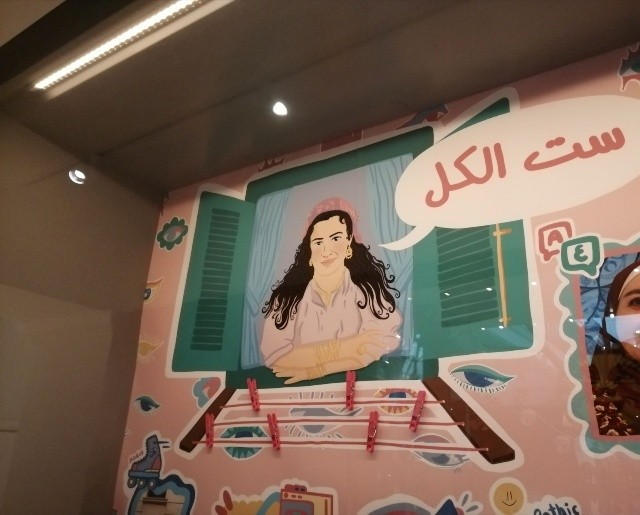
At the heart of the World Gallery at London’s Horniman Museum, a small corner pulses with life and stories, holds a grand ambition: to reimagine the representation of Egyptian women through the authentic voices of Egyptian women who live the present and shape the future. What deeply impacted me was that the Egyptian woman isn’t merely “displayed,” but rather “presented” as a voice in her own right, not just a subject of study. I also loved the blend of ancient history and modernity, and the contemporary design added a unique character, despite a touch of disarray at times. Following my visit, I listened to the podcast “Only Collections in the Building”. It greatly enriched my experience, prompting me to reflect on questions I had never considered before. I left the exhibition with a profound sense of seeing my country and my Egyptian identity from an entirely new perspective; not the traditional image often found in catalogues or news, but the true, complex, sometimes painful, and always inspiring. – Shimaa
Telling, Not Being Told
I went into the museum knowing little about the history of women’s struggles in Egypt, only assuming it might echo those of women elsewhere under oppression. The gallery felt visually overwhelming, with densely packed cases, and my initial reaction to the exhibition was mixed.
While the design aimed to feel contemporary and aligned with the theme, it ended up adding to the clutter. The other displays were organised in silos, by origin or museum-defined themes, framed through an academic lens, with scattered stories from the local diaspora, often presented in a top-down, instructional tone. Against that backdrop, this case felt like a breath of fresh air: women telling their own stories of struggle and resistance, grounded in lived experience and material culture. The accompanying podcasts offered important context on colonial interpretations, collection histories, grant politics, and the institutional risks of telling new stories. I left questioning whose voices were heard, perhaps only the privileged – but thinking more deeply about representation and the politics that surround it. – Vineet
Conclusion
This exhibition is more than a museum display, it’s a platform where Egyptian women reclaim their voices, identities, and histories. Across differing perspectives, we were all moved by how everyday objects become acts of resistance and how narratives shift. While we all share the idea that the design is somehow visually overwhelming and the display could be better presented, the impact of women speaking for themselves was undeniable. This display stands out in itself. It not only questions how women were seen, but it reasserts how they wish to be perceived. A call for space, agency, and equality.