A Research Facility Like No Other: Visiting the British Museum’s Archaeological Research Collection (BM_ARC) Storage Facility
Written by Aspasia Soula Georgiadou, Archaeological Officer, Department of Antiquities, Deputy Ministry of Culture, (Cyprus, ITP 2026)
Hi everyone. I’d like to briefly introduce myself to you all. My name is Aspasia Georgiadou, and I hail all the way from Cyprus, an island in the Eastern Mediterranean Sea. I have been an archaeological officer at the Department of Antiquities for little over nine years now working in the Photographic Archive and also digitizing from the Map Archives in GIS the ancient monuments and archaeological sites of Cyprus. I feel truly honoured and grateful to have been selected to participate in this year’s ITP programme, to learn from such a world-leading institution, making new connections and amazing friends along the way as well as joining this esteemed international network. I hope the information that I acquired from both my ITP fellows and my time spent with the staff at the BM as well as our partner museums I can somehow disseminate back to my own colleagues and department back home.
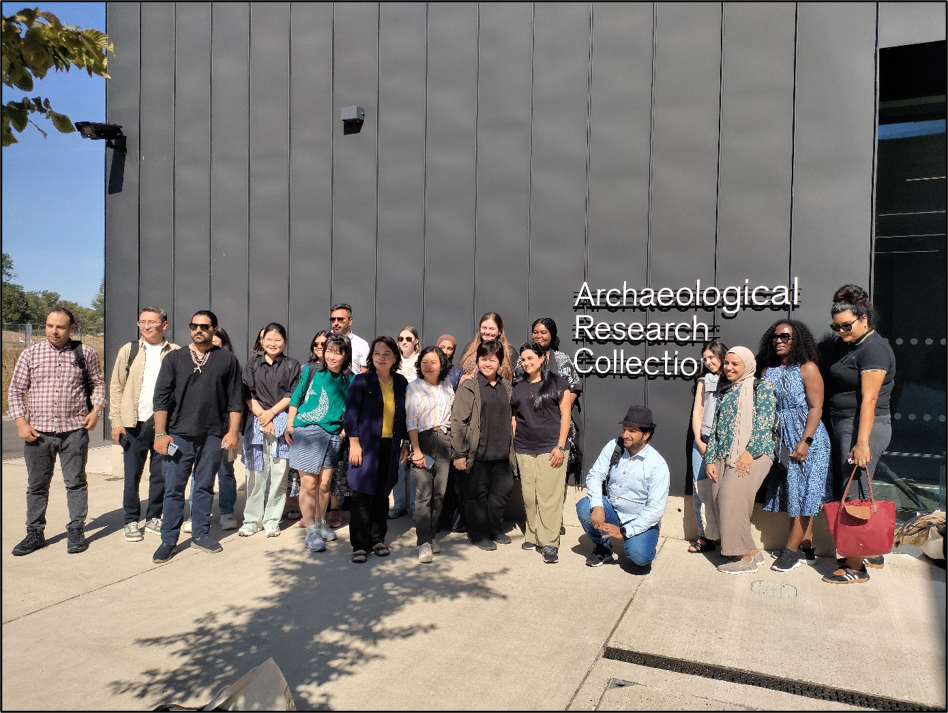
Whilst composing this blog entry, this year’s ITP is slowly coming to a bittersweet end for us all, and we will have to return to our home institutions where we hope we can transfer the knowledge and experiences we have obtained over these last few whirlwind weeks here in England. Our last trip as a group on Aug 7th, seems fitting in visiting the BM ARC, a truly state-of-the-art research space and storage facility composed of just a one-floor building across with high ceilings for easier transport of large objects, an envy to all archaeologists, curators and conservators worldwide.
The BM ARC is located about 1.5 hours outside of London, next to the University of Reading where the BM has partnered with the University itself. We were informed of the backstory of how the concept of BM ARC came about once we arrived and were warmly greeted by Morgan Brooks and Kathryn Godwin, the Collection Managers there.
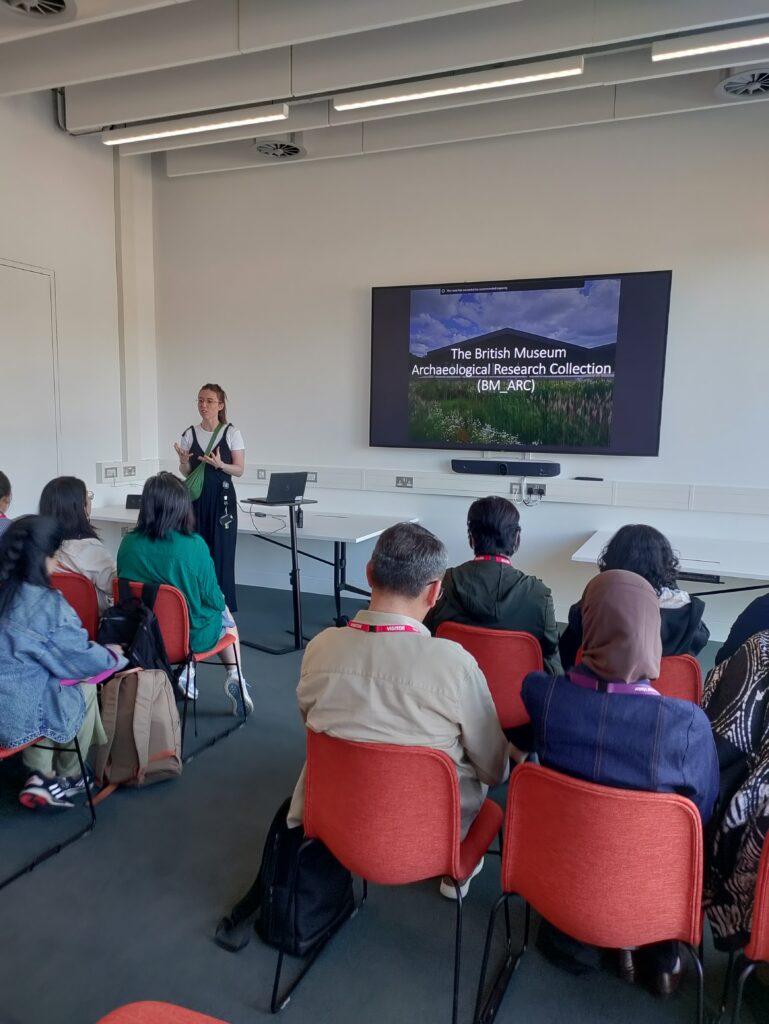
Back in 2015 the BM was notified that the Blythe House was being sold and that the collections of the BM that were stored there (approximately 1.5 million objects) had to be relocated elsewhere. This led the way for the Master Plan to be developed and the construction plans of the BM ARC and thus once it was completed began the mass transferring of artefacts from the BM and Blythe to the BM ARC for protection and safekeeping until the BM will be renovated and the galleries redeveloped for the public. Currently there are about 3 million objects including textiles, ceramic and stone artefacts, statues, human remains etc from various cultures and chronological periods all stored safely and securely in this facility, of which the artefacts are accessible to researchers wishing to study them in the designated study rooms through an appointment.
Morgan and Kathryn in the morning gave us a small tour of their facilities first showing us their archaeology store where a lot of the current BM objects from the site of Bloomsbury have been decanted and sent there to make way for the scheduled works. It was wonderful to see clear spacious racks fill the storage facility with environmental controls and the objects from the various BM departments placed in special containers as well as having ease of access to the collection managers. Each of the containers were color coded to illustrate the associate weight of that container.
At that moment I couldn’t help but reflect that shortly back in Cyprus we will also start the endeavor of transferring our museum storerooms and exhibits to the new Museum that is being currently built and hope that it will at the same level as the BM ARC.
Then they showed us their large object storerooms, followed by their loading bay, their packing room and their conservation labs which were fully equipped although I think the highlight of the tour was their actual supply closet which was entirely stocked.
Afterwards the first part of the visit, we had a quick lunch in their picnic area and the tour continued by splitting us up into three groups.
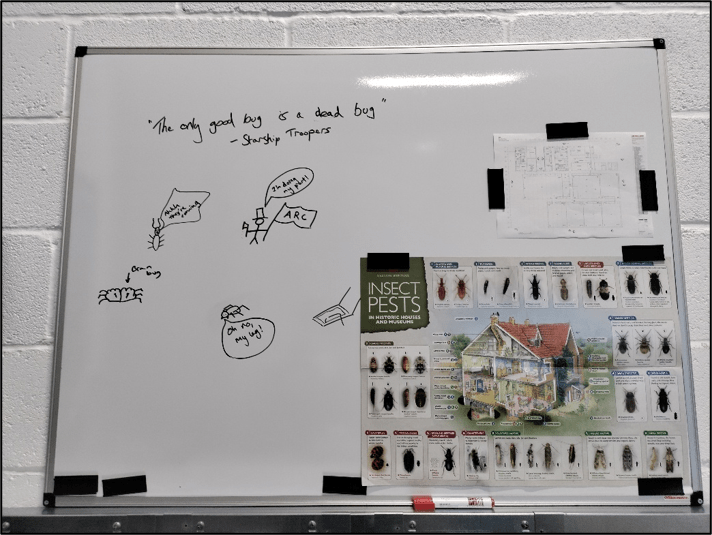
We began our seminar with a quick introduction to pest management and the protocols associated in the BM ARC followed with a little hands-on training to ensure that we truly dislike bugs.
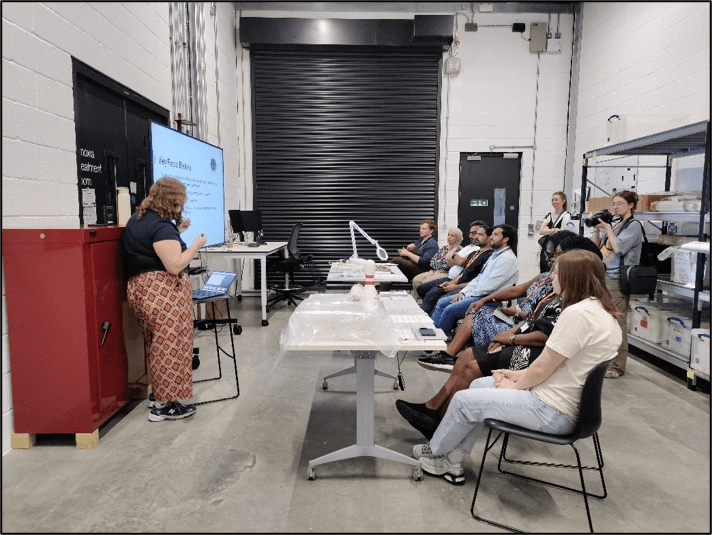
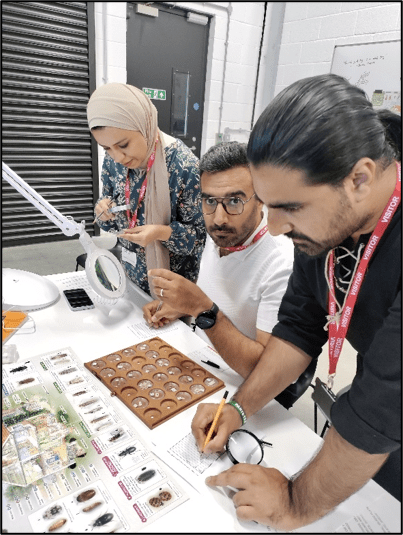
After that, we were taken to the textile storage section where we got to see how the textiles including national costumes and other fabric materials are kept and the various tools associated with textile production from so many countries.
Needless to say, I was pleasantly shocked to see that there were even rods from spindle wheels and looms from my own country!
Our tour concluded with the last stop to the designated researcher study space where we were informed how objects are brought into for the researcher to study, what is the necessary procedure for requesting the study objects etc and how facilitating the staff is to these requests.
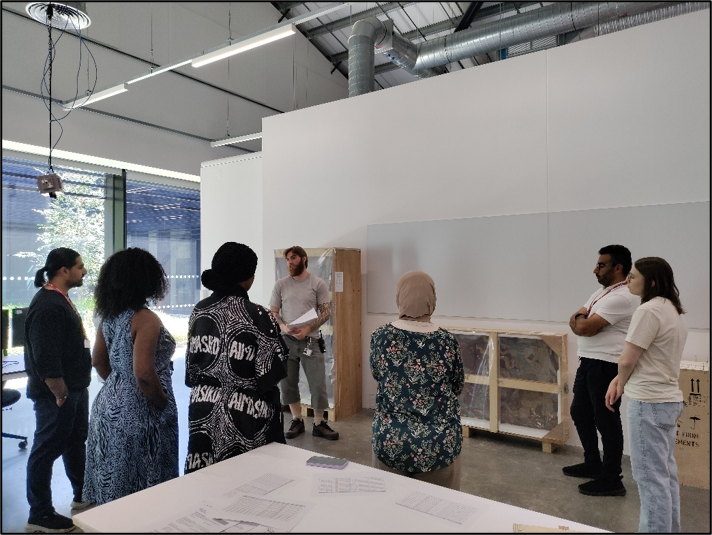
Eventually it was time to depart from this facility and head back into London. I think I speak for all of us when I say that this center is exceptional and just overall a wonderful space for research, for safeguarding antiquities, for conservation and in general just to learn.
I am just in awe of being so privileged as to have the opportunity to visit all these places and personally interact and learn with the dedicated staff of the BM. Looking forward to our final week here in London and what new experiences we will attain.